
Introduction
I’ll be honest with you — I was skeptical the first time someone told me I could make yogurt in my Instant Pot. I thought yogurt-making was one of those fancy, time-consuming kitchen projects reserved for people with a lot more patience (and counter space) than me. But after one batch, I was completely converted. And now? I haven’t bought store-bought yogurt in over two years.
Homemade Instant Pot yogurt is one of those kitchen wins that genuinely changes how you cook. You start with just two simple ingredients — whole milk and a couple of tablespoons of plain yogurt — and after a hands-off overnight process, you wake up to a big pot of thick, creamy, tangy yogurt that tastes infinitely better than anything you’ll find in a plastic tub at the grocery store.
What makes this version stand out from other recipes you’ll find online is the detail. I’ve tested this recipe dozens of times, troubleshot every possible problem, and figured out exactly what makes the difference between thin, watery yogurt and that luxuriously thick, Greek-style result that everyone goes crazy for. I’m giving you all of it right here.
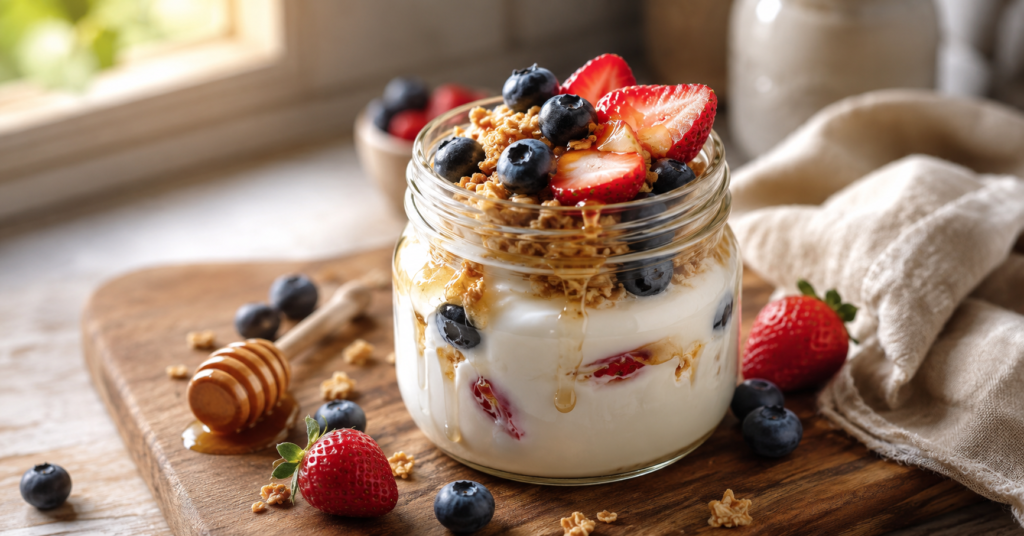
Whether you’re eating it for breakfast with granola and fresh berries, using it as a sour cream substitute in recipes, blending it into smoothies, or sneaking it straight from the jar with a spoon (no judgment — I do it too), this homemade yogurt fits beautifully into everyday life. It’s cheaper, healthier, and so much more satisfying when you made it yourself.
Let’s get into it.
Why You’ll Love This Recipe
- Only 2 ingredients required — whole milk and a yogurt starter. That’s it. No powders, no thickeners, no mystery additives.
- Completely hands-off — the Instant Pot does all the work while you sleep. You barely spend 15 minutes actively doing anything.
- Significantly cheaper than store-bought — a gallon of milk costs around $4–5 and yields about 8 cups of yogurt. Greek yogurt at the store? Easily $1.50–$2 per cup.
- No preservatives or artificial ingredients — you know exactly what’s in it, which matters especially if you’re feeding kids.
- Endlessly customizable — sweeten it, flavor it, strain it into Greek yogurt, or use it plain as a cooking ingredient.
- High in protein and gut-friendly probiotics — homemade yogurt is packed with live cultures that support digestive health.
- Perfect for meal prep — one batch lasts the whole week and can be portioned into individual jars for grab-and-go breakfasts.
- Beginner-friendly — if you’ve never made yogurt before, this is the easiest possible starting point. The Instant Pot takes the guesswork out of temperature control.
Quick Recipe Information
| Detail | Value |
|---|---|
| Prep Time | 10 minutes |
| Cook Time | 8 hours (incubation) + 30–60 min cooling |
| Total Time | ~9 hours (mostly hands-off) |
| Servings | 8 cups (about 16 half-cup servings) |
| Calories | ~110 per serving (½ cup) |
| Cuisine | American |
| Course | Breakfast / Snack / Condiment |
| Difficulty | Easy |
Ingredients
Main Ingredients
- 1 gallon (3.78 liters) whole milk — full-fat for the creamiest result
- 2 tablespoons plain yogurt with live active cultures — this is your starter (store-bought is perfectly fine)
Optional Ingredients
- 1–2 tablespoons pure vanilla extract — for a classic vanilla yogurt
- 2–4 tablespoons honey or maple syrup — stir in after incubation for natural sweetness
- Zest of 1 lemon — adds brightness, especially good for parfaits
- 1 tablespoon powdered milk — boosts protein content and helps yogurt set thicker
- 1 teaspoon cinnamon — warm and cozy, especially in fall and winter batches
Ingredient Notes
Whole Milk: The fat content in whole milk is what gives you that creamy, rich texture. You can technically use 2% milk, but the result will be noticeably thinner. Skim milk produces a very watery yogurt that almost always needs straining. If you want Greek-style thickness without the straining step, whole milk is your best bet.
Yogurt Starter: Your starter needs to contain live, active cultures — check the label. Brands like Fage, Stonyfield, or Chobani plain yogurt work beautifully. After your first batch, save 2 tablespoons of your own homemade yogurt to use as the next starter. I’ve carried the same “chain” of yogurt culture going for over a year.
Temperature Matters More Than Anything: The boil cycle gets milk to 180°F to kill off any competing bacteria and change the protein structure (which is what makes the yogurt thick). Cooling to exactly 110°F before adding the starter ensures the cultures stay alive. Too hot and you’ll kill them. Too cold and they won’t activate. This is the one step that’s non-negotiable.
Kitchen Equipment Needed
- Instant Pot (6-quart or 8-quart) — must have the Yogurt function (Ultra, Duo, Lux 6-in-1, Duo Plus all work)
- Instant-read thermometer — this is not optional; eyeballing temperature doesn’t work for yogurt
- Large whisk
- Ladle
- Fine mesh strainer + cheesecloth or a nut milk bag (for Greek-style yogurt)
- Glass jars or airtight containers for storage
- Large bowl (for the ice bath if you want to cool milk faster)
- Measuring spoons
Step-by-Step Instructions
Step 1: Pour the Milk Into the Instant Pot
Pour your full gallon of whole milk directly into the Instant Pot inner pot. No need to heat it first or do anything special — just pour it straight from the jug.
Why it matters: Starting with cold milk is totally fine because the Instant Pot’s boil function will bring it up to the right temperature.
Common mistake: Don’t add anything else to the pot at this stage. Adding the starter too early — before the milk cools — will kill your cultures.
Step 2: Run the Boil Cycle
Secure the lid on your Instant Pot (the steam release handle position doesn’t matter for this function). Press the Yogurt button, then press Adjust until the display reads “boil” or “PASTEURIZE.” The Instant Pot will now bring the milk up to approximately 180°F on its own. This typically takes 45–60 minutes depending on your model and the starting temperature of your milk.
When it’s done, the display will beep and show “YOGT.”
Why it matters: Heating the milk to 180°F pasteurizes it (even if you’re using store-bought pasteurized milk, this step matters!) and changes the protein structure of the whey proteins, which is what gives your final yogurt its thick, custard-like consistency.
Visual cue: You may notice a slight skin forming on top of the milk — that’s totally normal and expected.
Step 3: Cool the Milk to 110°F
This is the step that requires the most patience. Remove the inner pot from the Instant Pot and set it on your counter or in a cold water bath. Stir occasionally. Use your thermometer to monitor the temperature. You’re waiting for it to drop to 108°F–115°F — with 110°F being the sweet spot.
Speed tip: Place the inner pot in a large bowl filled with ice water, stirring gently. This cuts the cooling time from 45–60 minutes down to about 15–20 minutes.
Why it matters: If your milk is above 115°F when you add the starter, the heat will kill the live cultures and your yogurt will fail to set. Too cold (below 100°F) and the cultures won’t be active enough. This temperature window is critical.
Step 4: Add the Yogurt Starter
Scoop out about 1 cup of the warm milk into a small bowl. Add your 2 tablespoons of plain yogurt and whisk until completely smooth with no lumps. Then pour this mixture back into the main pot and give it a gentle stir.
Why it matters: Tempering the starter in a small amount of milk first ensures it incorporates smoothly and evenly. Dumping yogurt straight into the pot can leave streaks or clumps of starter that don’t distribute properly.
Common mistake: Using too much starter. More starter doesn’t mean thicker yogurt — it can actually result in an over-tangy, grainy texture. Stick to 2 tablespoons per gallon.
Step 5: Incubate
Place the inner pot back into the Instant Pot. Close the lid. Press the Yogurt button again. Use the + and – buttons to set the time to 8 hours. The display will count up from zero.
Walk away. Seriously — don’t open the lid, don’t stir it, don’t peek. Just let it do its thing.
Why it matters: The yogurt needs to incubate undisturbed at around 100–110°F to allow the cultures to do their work. Every time you open the lid, you let heat escape and disturb the setting process.
Note: More incubation time (up to 12 hours) = tangier yogurt. Eight hours produces a mild, creamy result that most people love. If you prefer a stronger tang, set it for 10–12 hours.
Step 6: Check for Doneness and Strain (Optional)
When the incubation cycle finishes, the Instant Pot will beep. Open the lid and gently tilt the pot. The yogurt should be set — it will jiggle slightly like a soft panna cotta but hold together. You’ll also see a small amount of whey (yellowish liquid) pooled on top. That’s completely normal and actually a sign of success.
For regular yogurt: Gently stir the whey back in (or pour it off if you prefer less liquid), ladle into jars, and refrigerate for at least 4 hours before eating.
For Greek-style yogurt: Line a fine mesh strainer with cheesecloth and set it over a large bowl. Ladle the yogurt in and let it drain in the refrigerator for 1–2 hours for thick Greek yogurt, or up to 4 hours for an ultra-thick, labneh-style result.
Step 7: Refrigerate and Enjoy
Transfer your yogurt to glass jars or an airtight container. Refrigerate for at least 4 hours — overnight is even better. The yogurt will continue to firm up as it chills. Before serving, stir it well and add any sweeteners or flavorings you like.
Expert Tips for Success
- Always use a thermometer. I can’t stress this enough. The boil and cooling steps live and die by temperature accuracy. A $10 instant-read thermometer is worth every penny for this recipe.
- Don’t skip the boil step. Even with pasteurized store-bought milk, the boil cycle changes the protein structure and is responsible for that thick, creamy texture. Skipping it gives you thin, disappointing yogurt.
- Use the freshest starter you can find. Check the expiration date on your store-bought yogurt. Older yogurt has weaker cultures and can lead to a failed batch.
- Reserve 2 tablespoons of every batch as your next starter. Label it in the fridge. You can keep using homemade yogurt as starter indefinitely — some people do this for years.
- Don’t rush the cooling. I know the ice bath trick speeds things up, but check the temperature frequently. If you add the starter when the milk is still 120°F, you’ll kill the cultures and the whole batch won’t set.
- The longer you strain, the thicker your yogurt. One hour = classic Greek yogurt thickness. Two to three hours = very thick, almost cream-cheese-like. The liquid you strain off (whey) is valuable — use it in smoothies, bread dough, or as a cooking liquid. It’s full of protein.
- Longer incubation = tangier flavor. If your family prefers mild yogurt, 6–7 hours works fine. For a sharper, tangier taste (great for cooking), go 10–12 hours.
- Add sweeteners after incubation, not before. Sugar added before incubation can interfere with culture activity.
- Whole milk always wins, but ultra-pasteurized milk can cause issues. Check your milk carton — if it says “Ultra-Pasteurized” or “UHT,” the proteins behave differently and your yogurt may not set as well. Regular pasteurized whole milk from the grocery store works perfectly.
- If your yogurt doesn’t set, don’t panic. You can add a new starter (tempered to 110°F) and run another incubation cycle. Alternatively, strain it through cheesecloth — even loose, partially-set yogurt makes excellent labneh.
- Clean jars matter. Store yogurt in very clean glass jars to prevent contamination and extend shelf life. I run mine through the dishwasher on hot before each use.
- Your Instant Pot model matters. Not all Instant Pots have a yogurt function. Check your model before starting — the Duo, Duo Plus, Ultra, and Pro all have it. The Lux does not.
Recipe Variations
Classic Vanilla Yogurt
After incubation, stir in 1–2 teaspoons of pure vanilla extract and 2–3 tablespoons of honey or maple syrup. Refrigerate as normal. This is a kid-approved version that tastes like a premium store brand — only better.
Vegan Coconut Milk Yogurt
Use full-fat canned coconut milk (about 4 cans) instead of dairy milk, and a vegan yogurt starter or probiotic capsules (2–3 opened capsules). The boil step still applies, and incubation works the same way. The result is a luscious, dairy-free yogurt with a subtle coconut flavor that pairs beautifully with tropical fruits.
Low-Fat Version
Use 2% milk instead of whole milk and strain for 1–2 hours to compensate for the thinner texture. It won’t be quite as rich, but it’s still significantly better than low-fat store-bought yogurt.
Strawberry Swirl Yogurt
Make a quick strawberry compote by simmering 1 cup of fresh or frozen strawberries with 1 tablespoon of honey until jammy. Let it cool completely, then swirl it into finished yogurt. Don’t blend it in — the swirl effect is half the joy.
Savory Herbed Yogurt (Tzatziki-Style)
Skip all sweeteners and instead stir in minced garlic, fresh dill, cucumber (grated and squeezed dry), a squeeze of lemon, and a drizzle of olive oil. This is an incredible sauce for grilled meats, veggie bowls, or as a dip with warm pita.
Gluten-Free Version
Great news — the base recipe is already naturally gluten-free! Just be sure your starter yogurt and any add-ins are certified gluten-free, which virtually all plain yogurts are.
What to Serve With Instant Pot Yogurt
Breakfast Ideas:
- Layered in a parfait with homemade granola and fresh berries
- Drizzled with honey and topped with sliced banana and chia seeds
- Blended into a smoothie with spinach, frozen mango, and pineapple
- Spread on toast with sliced peaches and a sprinkle of cinnamon
Savory Pairings:
- Served alongside spiced lamb kofta or grilled chicken shawarma
- Used as a cooling raita next to Indian curries or biryani
- As a sour cream substitute on tacos, baked potatoes, or chili
- Whisked into salad dressings for a creamy, tangy base
Dessert Uses:
- Swapped for buttermilk or sour cream in muffin and cake recipes
- Frozen with honey and crushed graham crackers for a quick frozen yogurt bark
- Mixed with lemon curd and served with shortbread cookies
Drinks That Pair Well:
- Chai tea, which complements the tang of the yogurt beautifully
- Fresh-pressed orange juice alongside a yogurt parfait breakfast
- A simple cold brew coffee with a dollop of vanilla yogurt stirred in
Storage Instructions
Refrigerator
Store homemade yogurt in airtight glass jars or containers in the refrigerator for up to 2 weeks. The flavor will become slightly tangier over time, which many people actually enjoy. Always use a clean spoon to scoop from the jar — no double dipping — to maximize shelf life.
Freezer
Homemade yogurt can be frozen for up to 2 months. Pour it into freezer-safe containers, leaving about an inch of headspace. Be aware that the texture will change once thawed — it often becomes slightly grainy or separated. Stir it vigorously after thawing to recombine. Frozen-and-thawed yogurt is best used in smoothies, baking, or cooking rather than eaten plain.
Reheating Methods
Yogurt isn’t typically reheated for eating, but if you’re using it in cooking:
- For sauces and soups: Stir in yogurt at the very end of cooking over low heat. High heat will cause it to curdle.
- For baking: Use it straight from the fridge — no warming needed.
- From frozen: Thaw overnight in the refrigerator, then stir well.
Nutritional Information
Per ½ cup serving (based on whole milk, no added sweeteners or flavoring)
| Nutrient | Amount Per Serving |
|---|---|
| Calories | 110 |
| Total Fat | 4g |
| Saturated Fat | 2.5g |
| Cholesterol | 15mg |
| Sodium | 110mg |
| Total Carbohydrates | 8g |
| Dietary Fiber | 0g |
| Total Sugars | 7g |
| Protein | 9g |
| Calcium | 300mg (30% DV) |
| Potassium | 380mg |
| Vitamin D | 2mcg |
| Probiotics | Billions of live cultures |
Note: Straining into Greek yogurt increases protein (up to 17g per serving) and reduces carbohydrates and sugars. Nutritional values are estimates and will vary based on milk brand and incubation time.
Common Mistakes to Avoid
- Adding the starter to milk that’s too hot. Anything above 115°F kills the cultures instantly. Always verify with a thermometer before adding the starter.
- Using ultra-pasteurized milk. The proteins in UHT/ultra-pasteurized milk behave differently and often result in a very loose, thin yogurt. Check your carton and choose regularly pasteurized milk.
- Skipping the thermometer. Estimating temperature by touch is unreliable. Even experienced yogurt makers use a thermometer every single time.
- Opening the lid during incubation. Every time you check on it, you disrupt the temperature and the setting process. Set it and leave it alone.
- Using too much starter. More is not better here. Two tablespoons per gallon is the sweet spot. Excess starter can result in over-fermented, grainy, or excessively sour yogurt.
- Using a starter with weak cultures. If your store-bought yogurt is close to expiration or has been heat-treated, the cultures may not be strong enough to set a new batch. Always check the “live active cultures” label.
- Expecting thick yogurt without straining. Regular yogurt straight from the pot is naturally thinner than Greek yogurt. If you want thick, creamy Greek-style, you must strain it. It won’t thicken to Greek consistency on its own, even with whole milk.
- Adding sweeteners before incubation. Sugar can inhibit culture activity. Always sweeten your yogurt after the incubation cycle is complete.
- Not letting it refrigerate long enough before eating. Pulling yogurt out of the Instant Pot and eating it immediately gives you a warm, loose result. Always chill for at least 4 hours — it firms up significantly in the fridge.
- Using a dirty Instant Pot. Any residual flavors or bacteria from previous cooks can affect your yogurt. Wash the inner pot and lid thoroughly before starting.
- Assuming a failed batch is ruined. If your yogurt didn’t set properly, you can re-inoculate with fresh starter at 110°F and run another incubation cycle. Many “failed” batches are saved this way.
- Incubating for too long on accident. If you forget about it and it incubates for 14+ hours, the yogurt will be extremely tart and may have a slightly grainy texture. It’s still safe to eat — just use it in baking or cooking where the tanginess is an asset.
Frequently Asked Questions
1. Do I need a special Instant Pot to make yogurt?
You need an Instant Pot model that has the Yogurt function. The Duo, Duo Plus, Ultra, Pro, and several other models include it. The Lux 3-in-1 does not have a yogurt setting. Check your model’s control panel — if you see a button labeled “Yogurt,” you’re good to go.
2. Why didn’t my yogurt set?
The most common culprits are: milk that was too hot when the starter was added (killing the cultures), a starter yogurt with weak or dead cultures, or ultra-pasteurized milk. Also, make sure you didn’t skip the boil cycle — this step is what prepares the milk proteins for proper setting.
3. Can I make yogurt in the Instant Pot without the yogurt button?
Technically yes, but it’s much harder. You’d need to manually maintain a temperature of 100–115°F for 8 hours using the “Keep Warm” function, checking frequently. The dedicated Yogurt button makes this completely foolproof, which is why I strongly recommend models that have it.
4. How long does homemade Instant Pot yogurt last?
Up to 2 weeks in the refrigerator in a clean, airtight container. The longer it sits, the tangier it gets, but it remains safe to eat throughout that window. Trust your nose — if it smells off, discard it.
5. Can I use non-dairy milk to make Instant Pot yogurt?
Yes! Full-fat coconut milk works best among non-dairy options. Oat milk and almond milk can work but produce much thinner results and often need thickeners like tapioca starch. You’ll also need a vegan yogurt starter or opened probiotic capsules in place of regular yogurt.
6. What’s the difference between regular and Greek yogurt?
Greek yogurt is simply regular yogurt that has been strained through cheesecloth to remove excess liquid whey. This concentrates the protein and creates a much thicker, creamier texture with less sugar and carbohydrates per serving. Both start from the same base — the straining step is the only difference.
7. Can I use my homemade yogurt as a starter for the next batch?
Absolutely — and this is one of the best things about making your own. Save 2 tablespoons of each finished batch in a labeled jar. You can keep this going indefinitely, though most experts recommend refreshing with a fresh commercial starter every 5–7 batches to keep the cultures strong.
8. Is homemade yogurt really cheaper than store-bought?
Significantly so. A gallon of whole milk runs about $4–6 and yields approximately 8 cups of yogurt. At typical Greek yogurt prices of $1.50–$2 per 5.3 oz cup, those same 8 cups would cost you $15–$18 at the store. You’re saving roughly $10–$12 per batch.
9. Can I flavor the yogurt before incubation?
It’s best to add flavors after incubation rather than before. Adding fruit or sweeteners before fermentation can inhibit culture activity and affect how well the yogurt sets. Vanilla extract and citrus zest are mild exceptions, but to be safe, always wait until after the incubation cycle is done.
10. Why is there liquid on top of my yogurt?
That yellowish liquid is whey — a completely normal byproduct of fermentation. It’s actually quite nutritious, full of protein and electrolytes. You can stir it back into the yogurt or pour it off. If you pour it off, use it in smoothies, bread dough, oatmeal, or as a liquid base for soups. Don’t throw it away!
Final Thoughts
Making yogurt in the Instant Pot is one of those simple pleasures that genuinely makes you feel like you’ve unlocked a kitchen superpower. It’s not complicated, it doesn’t require special skills or fancy equipment, and the payoff — thick, creamy, probiotic-rich yogurt that you made yourself — is absolutely worth the eight hours of waiting (most of which you’ll spend sleeping anyway).
The first time you pull that lid off and see a perfectly set, beautiful pot of homemade yogurt, you’re going to feel ridiculously proud of yourself. And then you’ll eat a spoonful still warm from the pot, drizzled with honey, and you’ll wonder why it took you so long to try this.
I promise: once you start making your own yogurt, going back to store-bought feels like a step backward. Give this recipe a try this weekend, save a couple tablespoons for your next batch, and you might just find yourself on a year-long (or longer) yogurt-making streak — just like me.
If you make this recipe, I’d love to hear how it turned out! Drop a comment below with any questions or leave a star rating if you loved it. And if you strained it into Greek yogurt, please tell me what you topped it with — I’m always looking for new ideas.
Happy cooking! 🥛