
Introduction
The first time I made fire cider, I honestly wasn’t sure what I was getting myself into. A friend had handed me a small shot glass of this deep amber, aggressively spiced liquid and told me to “just trust her.” One sip later, my sinuses were clear, my eyes were watering just slightly, and I was immediately hooked.
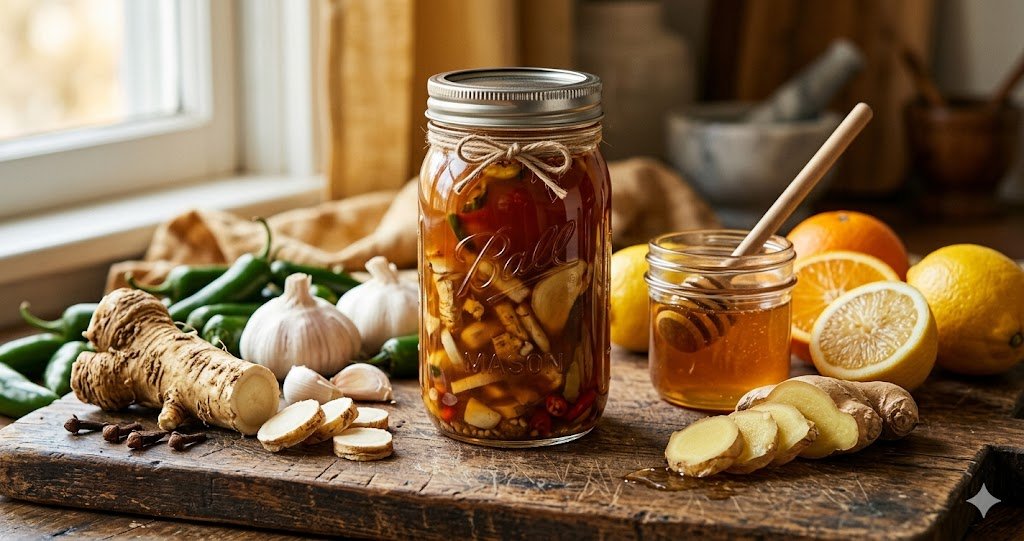
Fire cider is a traditional herbal folk remedy — a raw apple cider vinegar infusion packed with pungent, warming ingredients like horseradish, ginger, garlic, onion, and hot peppers. It’s been used in herbalism for decades, most famously popularized by herbalist Rosemary Gladstar in the 1980s, and it has since become a staple in natural wellness kitchens everywhere.
What makes this version special? I’ve spent two years tweaking this recipe — adjusting ratios, experimenting with citrus additions, playing with honey quantities — until I landed on a version that’s genuinely delicious, not just medicinal. It has heat, brightness, sweetness, and depth. You can take it as a morning shot, mix it into salad dressings, stir it into soups, or use it as a marinade.
It’s the kind of thing you make once and keep making forever.
Why You’ll Love This Recipe
- Incredibly easy to make — no cooking required, just chopping and waiting
- Uses simple, whole ingredients you can find at any grocery store
- Naturally supports immune health with antibacterial and anti-inflammatory ingredients
- Completely customizable based on your heat tolerance and flavor preferences
- Lasts for months in the refrigerator, so one batch goes a long way
- Versatile in the kitchen — not just a health shot, but a genuine culinary ingredient
- Vegan and gluten-free right out of the gate
- No special equipment needed — just a jar, a knife, and a grater
Quick Recipe Information
| Detail | Value |
|---|---|
| Prep Time | 20 minutes |
| Cook Time | 0 minutes (raw infusion) |
| Infusion Time | 3–4 weeks |
| Total Time | 3–4 weeks |
| Servings | Approx. 2 cups (32 shots) |
| Calories | ~15 per 1 oz serving |
| Cuisine | American Folk/Herbal |
| Course | Tonic / Condiment |
| Difficulty | Easy |
Ingredients
Main Ingredients
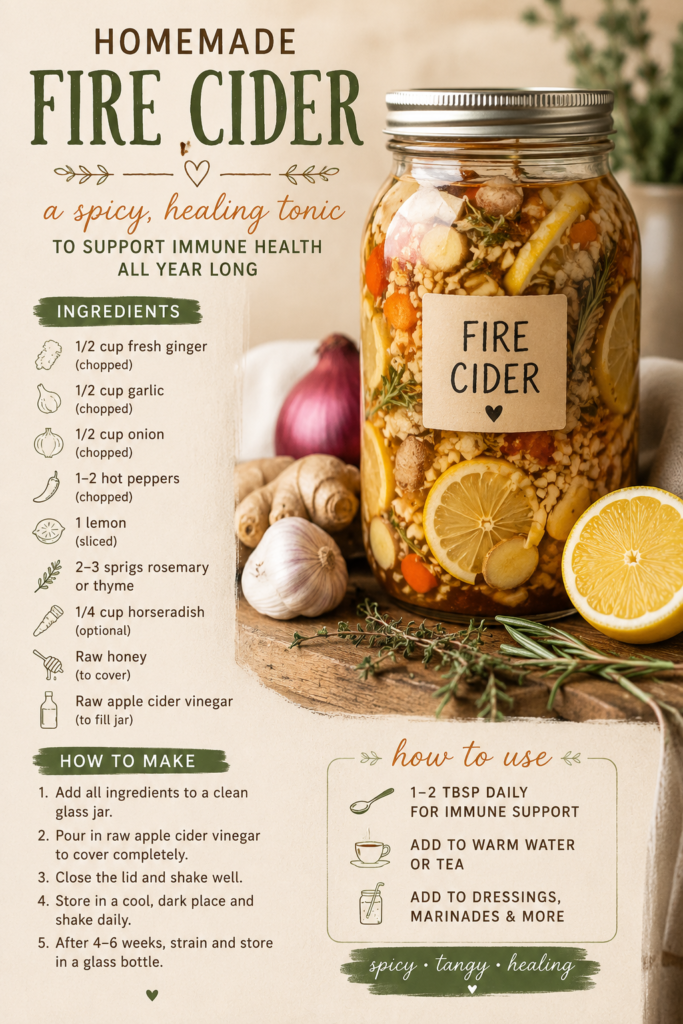
- 1 cup fresh horseradish root, peeled and grated (about one 6-inch piece)
- ½ cup fresh ginger root, peeled and grated
- ½ cup white onion, roughly chopped
- 8 cloves fresh garlic, smashed and roughly chopped
- 2 fresh jalapeño peppers, sliced (seeds included for heat)
- 1 lemon, zest and juice
- 1 orange, zest and juice
- 1 tablespoon black peppercorns, roughly cracked
- 1 tablespoon dried turmeric (or 2 tablespoons fresh, grated)
- 2–3 cups raw, unfiltered apple cider vinegar (enough to fully submerge all ingredients — Bragg’s is my go-to)
- ¼ cup raw honey (added after straining, to taste)
Optional Ingredients
- 1 cinnamon stick — adds warm sweetness and depth
- 1 tablespoon fresh rosemary — earthy, aromatic undertone
- 1–2 habanero peppers — if you want serious heat
- 1 tablespoon raw cacao nibs — surprisingly good, adds slight bitterness
- 2 tablespoons fresh beet, grated — earthy flavor and a gorgeous deep color
- Pinch of cayenne powder — for an extra kick at the end
- 1 tablespoon fresh thyme — bright, herbal lift
Ingredient Notes
Horseradish is the backbone of this recipe. It provides the signature sharp, sinus-clearing punch. Fresh is non-negotiable here — jarred horseradish in vinegar simply won’t give you the same result. Wear gloves when grating it if you have sensitive skin.
Apple cider vinegar is the extraction vehicle. It pulls all the beneficial compounds out of the roots, herbs, and spices over time. Raw, unfiltered ACV with “the mother” is essential — you’re looking for that cloudy, unpasteurized version, not the clear, shelf-stable kind.
Ginger adds warmth and a citrusy heat that’s different from the pepper heat. It’s also one of the most studied anti-inflammatory ingredients you can use.
Garlic brings depth, pungency, and well-documented antimicrobial properties. Don’t skimp on it.
Honey is added after straining because raw honey’s beneficial enzymes are destroyed by the acid over long infusion periods. Add it at the end to preserve its quality and adjust sweetness to your taste.
Turmeric gives the fire cider its gorgeous golden hue and contributes anti-inflammatory curcumin compounds. Add a pinch of black pepper along with it — the piperine in black pepper dramatically increases curcumin absorption.
Kitchen Equipment Needed
- 1 quart-sized wide-mouth mason jar (with a plastic lid or parchment paper barrier — the vinegar will corrode metal lids over time)
- Box grater or microplane
- Sharp chef’s knife and cutting board
- Fine-mesh strainer or cheesecloth
- Funnel
- Smaller glass bottle or jar for storage
- Rubber gloves (optional, for handling horseradish)
- Wooden spoon or muddler
Step-by-Step Instructions
Step 1: Prep Your Ingredients
Peel and grate your horseradish and ginger. This is the most labor-intensive part of the whole recipe, so take your time. Grate both over a large bowl to capture all their juices — those juices are full of flavor and should go into the jar. Smash and roughly chop your garlic, dice the onion, and slice the jalapeños. Zest your lemon and orange first, then juice them.
Why it matters: Rough, irregular cuts and grating maximize surface area, which speeds up the extraction process and results in a more potent final product.
Common mistake: Using a food processor to pulse everything into a paste. This can over-process the ingredients and make straining very difficult later.
Step 2: Load the Jar
Add everything to your mason jar — horseradish, ginger, garlic, onion, jalapeños, citrus zest and juice, peppercorns, turmeric, and any optional add-ins you’re using. Pack them in firmly.
Why it matters: You want the jar as full of ingredients as possible before adding the vinegar. The more plant material, the more robust the infusion.
Step 3: Cover with Apple Cider Vinegar
Pour apple cider vinegar over all the ingredients until they are completely submerged — typically 2 to 3 cups. Use a wooden spoon to press everything down and release any air pockets. The ingredients must stay below the vinegar line throughout the entire infusion to prevent mold.
Visual cue: Every ingredient should be fully wet and submerged. If anything is floating up, weigh it down with a small piece of parchment paper folded and pressed inside the jar.
Step 4: Seal and Label
Place a piece of parchment paper between the jar and the metal lid (or use a plastic mason jar lid). The vinegar will corrode metal over time. Label the jar with the date. Shake it gently to combine everything.
Step 5: Infuse for 3–4 Weeks
Store the jar in a cool, dark place — a pantry or cabinet works perfectly. Shake the jar once a day, or whenever you remember. This redistribution helps the vinegar extract flavor and beneficial compounds evenly.
Why it matters: The longer you infuse (up to 4 weeks), the deeper and more complex the flavor. Don’t rush this step — it’s where the magic happens.
Common mistake: Storing the jar in direct sunlight or near a heat source, which can degrade the ingredients.
Step 6: Strain and Sweeten
After 3–4 weeks, strain the mixture through a fine-mesh strainer lined with cheesecloth into a large bowl. Press the solids firmly to extract every last drop of liquid. Discard the solids (or compost them).
Now stir in raw honey to taste — start with 2 tablespoons and adjust. Taste as you go. Some people like it barely sweet, others prefer a more balanced heat-sweet ratio.
Why it matters: Adding honey after straining preserves its enzymes and flavor, and gives you full control over the final taste.
Step 7: Bottle and Store
Pour your finished fire cider into a clean glass bottle or jar using a funnel. Label it with the date and refrigerate.
Expert Tips for Success
- Always use fresh horseradish. There’s truly no substitute here. It’s widely available at most grocery stores and worth seeking out.
- Wear gloves when grating horseradish. The volatile compounds can irritate skin, especially sensitive hands.
- Use a plastic or parchment-lined lid. Metal lids will rust and corrode from extended contact with vinegar.
- Shake daily. This one small habit makes a big difference in extraction quality and final flavor complexity.
- Don’t strain too early. Three weeks is the minimum — four weeks produces a noticeably richer result.
- Taste before adding honey. Honey changes the entire flavor profile. Add it gradually and taste as you go.
- Save the strained solids — they can be mixed into salad dressings, grain bowls, or used as a spicy relish condiment.
- Use a wide-mouth jar for easy packing and straining.
- Add citrus on the day you make it — the volatile oils in fresh zest are at their peak right after zesting.
- Label everything. After four weeks, you’ll be grateful you wrote the date down.
- Make a double batch — fire cider makes an excellent gift in small labeled bottles, and you’ll always want more on hand than you think.
- If you see cloudiness in the finished product, don’t panic — this is normal and actually a sign of a robust infusion.
Recipe Variations
Citrus-Forward Version
Double the lemon and orange, and add a small grapefruit. Omit the jalapeño for a brighter, slightly milder tonic.
Extra Spicy Version
Add 2 habanero peppers (seeds included) plus a full tablespoon of cayenne. Not for the faint of heart — this version will genuinely open every sinus in your body.
Elderberry Fire Cider
Add ½ cup dried elderberries to the jar. They add a beautiful tartness and pair the fire cider with another beloved immune-supporting ingredient.
Beet and Ginger Version
Add ¼ cup grated raw beet and increase the ginger to ¾ cup. The color is stunning — a deep jewel-toned ruby — and the earthy sweetness of beet softens the sharpness nicely.
Low-Heat Version
Use only one jalapeño (seeds removed) and omit any additional hot peppers. Lean into the warming qualities of ginger and black pepper instead.
What to Serve With Fire Cider
As a morning shot: Take 1–2 ounces straight, first thing in the morning on an empty stomach or with a small meal.
In salad dressings: Swap out half the vinegar in your favorite vinaigrette for fire cider. It’s genuinely excellent over roasted beet salads.
In soups and broths: Stir a tablespoon into chicken broth or vegetable soup just before serving for brightness and depth.
With oysters: A small drizzle over fresh oysters on the half shell is a revelation.
In cocktails and mocktails: Mix with sparkling water and a splash of orange juice for a spicy, energizing mocktail. Or shake with bourbon for a wild Bloody Mary riff.
As a marinade: Mix with olive oil and use it to marinate chicken, tofu, or vegetables before roasting.
Storage Instructions
Refrigerator
Finished fire cider (after straining and adding honey) keeps in the refrigerator for up to 6 months. The vinegar acts as a natural preservative. Store in a sealed glass jar or bottle.
Freezer
Freezing is not recommended — it can alter the texture and may dull some of the volatile flavor compounds. The refrigerator lifespan is long enough that freezing is unnecessary.
Before Straining
The unstraiend jar can sit at room temperature (in a cool, dark place) throughout the entire 3–4 week infusion period without refrigeration.
Nutritional Information
Per 1 oz (approximately 2 tablespoon) serving:
| Nutrient | Amount |
|---|---|
| Calories | ~15 kcal |
| Total Fat | 0g |
| Saturated Fat | 0g |
| Cholesterol | 0mg |
| Sodium | 5mg |
| Total Carbohydrates | 3g |
| Dietary Fiber | 0g |
| Total Sugars | 2g |
| Protein | 0g |
| Vitamin C | ~4% DV |
| Potassium | ~30mg |
Note: Nutritional values are estimates and will vary based on exact ingredients used and honey quantity added.
Common Mistakes to Avoid
- Using bottled horseradish. It’s already acidified and won’t infuse properly. Fresh only.
- Using pasteurized apple cider vinegar. You lose the beneficial enzymes and the infusion quality drops significantly.
- Using a metal lid without a barrier. The vinegar will corrode the metal and can introduce off-flavors.
- Not shaking the jar regularly. Ingredients settle, and the ones not submerged can develop surface mold.
- Adding honey before straining. It will ferment oddly and lose its properties over the 3-4 week period.
- Straining too early. A two-week infusion is noticeably less flavorful than a four-week one.
- Storing near light or heat. This degrades the plant compounds. A dark, cool pantry is ideal.
- Overfilling the jar. Leave at least an inch of headspace so you can shake it effectively.
- Skipping the parchment-paper barrier on the lid and ending up with a corroded lid stuck to the jar.
- Taking too large a dose too quickly. Start with 1 tablespoon a day if you’re new to fire cider. The heat and acidity can be a shock to the digestive system if you jump straight to 2-ounce shots.
- Forgetting to label the jar. After a month, you’ll have no idea when you started it.
- Discarding the strained solids. They’re still flavorful and can be used as a spicy condiment or mixed into dressings.
Frequently Asked Questions
1. What does fire cider taste like?
Fire cider is sharp, tangy, spicy, and warming — like a very bold, pungent vinegar with layers of heat from the horseradish, ginger, and peppers. When honey is added, there’s a pleasant sweet-heat balance that makes it surprisingly addictive.
2. How much fire cider should I take per day?
Most people take 1–2 ounces (2–4 tablespoons) per day, either as a morning shot or diluted in water. If you’re new to it, start with one tablespoon and work your way up.
3. Can I make fire cider without horseradish?
You can, but it won’t truly be fire cider — horseradish is the defining ingredient. If you genuinely can’t find it, extra ginger and wasabi root are the closest substitutes, though the result will be quite different.
4. Does fire cider actually work for immune health?
Many of the individual ingredients — garlic, ginger, horseradish, apple cider vinegar — have well-documented antimicrobial and anti-inflammatory properties. While fire cider isn’t a medical treatment, it’s a nutrient-dense, functional food that many people find supportive of overall wellness.
5. Can I use ground ginger instead of fresh?
I strongly recommend fresh. Ground ginger produces a much less vibrant, slightly dusty flavor. The bright, citrusy heat of fresh ginger is irreplaceable in this recipe.
6. Is fire cider safe for everyone?
Most healthy adults tolerate fire cider well. However, those with acid reflux, GERD, or ulcers should exercise caution given the vinegar content. Consult your doctor if you’re pregnant, on medications, or have digestive sensitivities.
7. What’s the difference between fire cider and shrubs?
Both are vinegar-based infusions, but shrubs are typically fruit-forward and used primarily as cocktail mixers. Fire cider is herb and root-based, with a medicinal and culinary focus.
8. Can I reuse the strained solids to make a second batch?
The solids will have given most of their beneficial compounds to the first infusion. You can technically use them again, but the second batch will be significantly less potent. Better to compost or use them as a condiment.
9. Why is my fire cider cloudy?
Cloudiness is completely normal and expected. It’s caused by the natural compounds from the horseradish, ginger, and raw ACV “the mother.” Shake before use and enjoy — cloudiness is a sign of a robust, unfiltered infusion.
10. How long does homemade fire cider last?
Properly stored in a sealed glass container in the refrigerator, finished fire cider keeps for up to 6 months. The high vinegar content is a natural preservative.