
Introduction
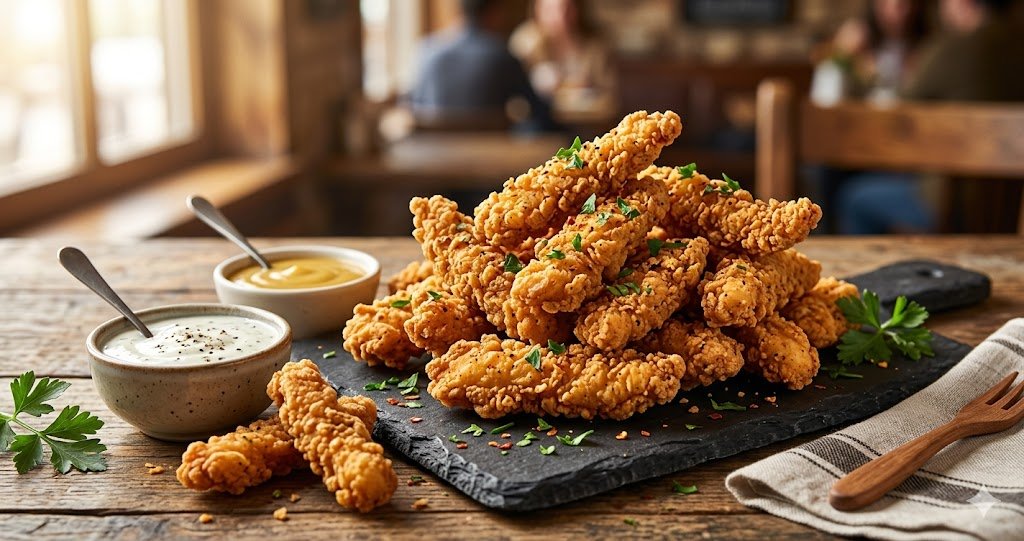
If you’ve ever bitten into a perfectly crispy, golden chicken fry and thought, “I wish I could make these at home,” — you’re in the right place. These fried chicken fries are exactly what the name promises: tender strips of seasoned chicken breast, coated in a shatteringly crispy breading, fried to golden perfection, and shaped just like your favorite fast-food fries.
I first made these on a Friday night when I was craving something snacky and satisfying but didn’t want to leave the house. After a few test batches (and some very happy taste testers in my kitchen), this recipe was born — and honestly, it blew every fast-food version out of the water.
People absolutely love these because they hit every craving at once: crispy, salty, savory, and utterly addictive. They’re brilliant as a party appetizer, a fun after-school snack for kids, a game-day crowd-pleaser, or even a main course served alongside fries and coleslaw. What makes this version special? A double-dredge technique, a perfectly balanced spice blend, and a little buttermilk soak that guarantees juicy chicken every single time.
Why You’ll Love This Recipe
- ✅ Crispier than any restaurant version thanks to the double-dredge method
- ✅ Ready in under 35 minutes — faster than delivery
- ✅ Made with simple pantry ingredients you likely already have
- ✅ Customizable heat level — mild, medium, or fiery hot
- ✅ Kid-friendly and crowd-pleasing for every age group
- ✅ Perfect for meal prep — freeze a batch and reheat whenever hunger strikes
- ✅ No fancy equipment needed — just a skillet or deep pan works great
- ✅ Pairs with everything from ranch dip to honey mustard to sriracha mayo
Quick Recipe Information
| Detail | Value |
|---|---|
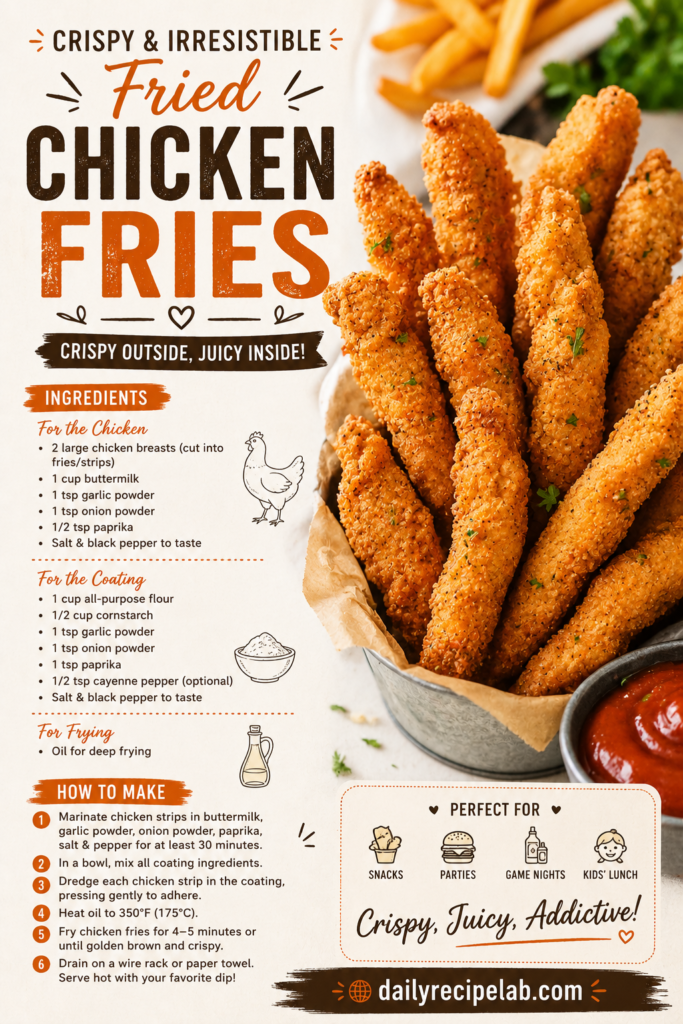
| Prep Time | 15 minutes |
| Cook Time | 15–20 minutes |
| Total Time | 30–35 minutes |
| Servings | 4 servings |
| Calories | ~380 kcal per serving |
| Cuisine | American |
| Course | Snack / Appetizer / Main |
| Difficulty | Easy |
Ingredients
Main Ingredients
- 500g (about 1.1 lb) boneless, skinless chicken breast — cut into thin strips (about ½ inch wide, 3–4 inches long)
- 1 cup buttermilk
- 1 large egg
- 1½ cups all-purpose flour
- ½ cup cornstarch
- 1½ tsp garlic powder
- 1½ tsp onion powder
- 1 tsp smoked paprika
- 1 tsp cayenne pepper (adjust to taste)
- 1 tsp black pepper
- 1½ tsp salt
- ½ tsp dried oregano
- Vegetable oil or canola oil for frying (enough to fill about 2 inches deep in your pan)
Optional Ingredients
- 1 tsp hot sauce (added to buttermilk for extra kick)
- ½ tsp white pepper (adds depth)
- 1 tbsp grated Parmesan (mixed into breading for a savory boost)
- 1 tsp celery salt (for a subtle classic fried chicken flavor)
- Pinch of sugar (helps with browning)
Ingredient Notes
Buttermilk: This is the magic ingredient. The acidity tenderizes the chicken fibers while the thickness helps the coating stick. If you don’t have buttermilk, mix 1 cup of regular milk with 1 tablespoon of white vinegar or lemon juice and let it sit for 5 minutes.
Cornstarch: Mixing cornstarch with flour is the secret to that extra-crispy crust. The cornstarch reduces gluten formation, which creates a lighter, crunchier texture rather than a thick, heavy coating.
Smoked Paprika: Adds gorgeous color and a subtle smoky depth that takes the flavor from flat to fantastic.
Egg: Whisked into the buttermilk, the egg adds structure and helps the breading adhere beautifully during frying.
Chicken Breast vs. Thigh: Breast meat gives you that clean, “fry-shaped” strip that holds its form. However, if you want more flavor and moisture, you can absolutely use boneless thigh meat cut into strips.
Kitchen Equipment Needed
- Large mixing bowls (2)
- Shallow baking dish or wide bowl for dredging
- Deep skillet, cast iron pan, or Dutch oven
- Kitchen thermometer (highly recommended)
- Wire rack and baking sheet (for resting fried pieces)
- Tongs or a spider strainer
- Paper towels
- Sharp knife and cutting board
Step-by-Step Instructions
Step 1: Prepare and Marinate the Chicken
Slice your chicken breasts into thin strips — aim for roughly ½ inch wide and 3–4 inches long. This gives you that classic “fry” shape that makes these so fun to eat. Place the strips into a bowl and pour the buttermilk and egg mixture over them (whisk the egg directly into the buttermilk). Add a pinch of salt and hot sauce if using.
Why it matters: Even a 15-minute soak makes a difference in tenderness. If you have time, let it marinate in the fridge for up to 2 hours for the juiciest result.
Step 2: Mix Your Dry Coating
In a shallow dish, whisk together the flour, cornstarch, garlic powder, onion powder, smoked paprika, cayenne, black pepper, salt, and oregano until everything is evenly combined.
Visual cue: The mixture should look uniformly orange-beige. No white streaks of unincorporated flour.
Common mistake: Skipping the cornstarch. It’s the difference between crispy and soggy.
Step 3: Double Dredge the Chicken
Remove a chicken strip from the buttermilk, letting the excess drip off. Coat it thoroughly in the flour mixture, pressing gently so it adheres. Dip it back into the buttermilk briefly, then coat in the flour mixture a second time, pressing firmly.
Why this matters: The double dredge creates layers in the coating, which means more texture, more crunch, and that gorgeous craggy exterior you see in the best fried chicken.
Pro tip: Don’t rush this step. Press the coating in gently but firmly — you want it to grip the chicken, not fall off in the oil.
Step 4: Rest the Coated Chicken
Place your coated strips on a wire rack or plate and let them rest for 5–10 minutes before frying.
Why it matters: This rest time allows the coating to hydrate slightly and bond to the chicken. Skipping this step is one of the biggest reasons coatings fall off during frying.
Step 5: Heat the Oil
Pour your oil into the skillet to about a 2-inch depth. Heat over medium-high heat until it reaches 350°F (175°C). Use a kitchen thermometer for accuracy — this really does make a difference.
Visual cue: If you drop a tiny pinch of flour into the oil, it should sizzle and rise immediately. If it sinks, the oil isn’t hot enough.
Step 6: Fry the Chicken Fries
Working in small batches (don’t overcrowd!), gently lower the chicken strips into the hot oil. Fry for 3–4 minutes per side, or until deeply golden brown and cooked through.
Internal temperature should reach 165°F (74°C).
Common mistake: Overcrowding the pan drops the oil temperature dramatically, leading to greasy, soggy chicken instead of crispy perfection.
Step 7: Drain and Season
Transfer the fried chicken fries to a wire rack set over a baking sheet. Season with a pinch of flaky salt immediately while still hot.
Why a wire rack matters: Resting on paper towels traps steam underneath the chicken, making the bottom soggy. A wire rack lets air circulate all around, keeping every side crispy.
Expert Tips for Success
- Always use a thermometer — guessing oil temperature is the number one reason homemade fried chicken disappoints.
- Cut strips uniformly so they cook in the same amount of time.
- Don’t skip the buttermilk soak — even 15 minutes transforms the texture.
- Dry your chicken strips gently with a paper towel before dipping in buttermilk if they’re very wet from the package.
- Keep your oil temperature steady between batches — let it come back up to 350°F before adding more chicken.
- Season the flour generously — under-seasoned coating leads to bland results no matter how good your dipping sauce is.
- Use fresh oil — old or reused oil can impart off-flavors.
- Rest before eating — give your chicken fries 2 minutes on the rack before serving. They firm up beautifully.
- For extra crunch, add 2 tablespoons of panko breadcrumbs to your flour mixture.
- Fry in batches — patience here pays off massively in the final texture.
- Maintain a neutral oil like canola, vegetable, or peanut oil for the cleanest flavor.
- Don’t move the chicken too soon — let it develop a crust before flipping, or the coating may tear.
Recipe Variations
🥦 Vegetarian Version
Swap chicken for extra-firm tofu pressed and cut into strips, or use cauliflower florets shaped into fry-like pieces. Same dredge, same method — incredibly satisfying.
🌱 Vegan Version
Use tofu or cauliflower, replace buttermilk with plant-based milk + apple cider vinegar, and skip the egg. Add 1 tablespoon of aquafaba to the wet mixture for binding.
🌾 Gluten-Free Version
Replace all-purpose flour with rice flour or a 1:1 gluten-free flour blend. Rice flour actually fries exceptionally crispy — some people prefer it over regular flour.
🥗 Low-Calorie Version
Air fry at 400°F (200°C) for 12–15 minutes, flipping halfway. Spray with a light coat of cooking spray before air frying. You’ll get about 60–70% fewer calories with still-impressive crispiness.
🌶️ Spicy Version
Double the cayenne, add 1 tsp chili flakes to the coating, and toss the finished chicken fries in a drizzle of hot honey or Nashville hot sauce right before serving.
What to Serve With Fried Chicken Fries
Dipping Sauces: Ranch dressing, honey mustard, sriracha mayo, BBQ sauce, chipotle aioli, buffalo sauce
Side Dishes: Classic coleslaw, waffle fries, mac and cheese, corn on the cob, pickles, biscuits
Drinks: Ice-cold lemonade, sweet tea, a crisp pale ale, or a classic cola
Desserts: Banana pudding, strawberry shortcake, or a simple scoop of vanilla ice cream to balance the heat
Storage Instructions
Refrigerator
Store cooled chicken fries in an airtight container for up to 3–4 days. Line the container with paper towels to absorb moisture.
Freezer
Freeze in a single layer on a baking sheet first, then transfer to a freezer-safe bag. They’ll keep beautifully for up to 2 months.
Reheating Methods
- Oven (best method): Place on a wire rack on a baking sheet and reheat at 400°F (200°C) for 10–12 minutes. Crispy result guaranteed.
- Air Fryer: 375°F for 5–7 minutes — almost as good as fresh.
- Microwave (last resort): 60–90 seconds, but expect the coating to soften.
Nutritional Information
| Nutrient | Per Serving (approx.) |
|---|---|
| Calories | 380 kcal |
| Protein | 32g |
| Total Fat | 15g |
| Saturated Fat | 3g |
| Carbohydrates | 28g |
| Fiber | 1g |
| Sugar | 1g |
| Sodium | 620mg |
| Cholesterol | 95mg |
Values are approximate and may vary based on specific ingredients and oil absorption.
Common Mistakes to Avoid
- Not soaking in buttermilk — you’ll end up with dry, flavorless chicken.
- Oil that’s too cool — results in greasy, oil-soaked coating.
- Oil that’s too hot — burns the outside before the inside cooks through.
- Overcrowding the pan — drops oil temp and leads to soggy fries.
- Skipping the double dredge — single-coat just doesn’t give you that craggy, crispy exterior.
- Not resting the coated chicken before frying — coating falls off in the oil.
- Resting on paper towels instead of a wire rack — steams and softens the bottom.
- Under-seasoning the flour — bland coating no matter what sauce you use.
- Moving the chicken too early — let the crust form before flipping.
- Cutting strips too thick — they won’t cook through at the same rate as thinner ones.
- Using wet chicken directly from the package without patting it down first.
- Reheating in the microwave — always use the oven or air fryer to preserve crispiness.
Frequently Asked Questions
1. Can I use chicken thighs instead of chicken breast for this recipe?
Absolutely! Boneless, skinless chicken thighs are juicier and more forgiving to cook. Just make sure to cut them into even strips and cook to an internal temperature of 165°F.
2. What oil is best for frying chicken fries?
Neutral oils with high smoke points work best — canola oil, vegetable oil, and peanut oil are all excellent choices. Avoid olive oil for deep frying.
3. Can I make fried chicken fries in an air fryer?
Yes! Air fry at 400°F (200°C) for 12–15 minutes, flipping halfway through. Spray lightly with cooking spray for the best crunch. The result won’t be quite as crispy as deep-fried, but it’s still really delicious.
4. How do I keep fried chicken fries crispy after cooking?
Rest them on a wire rack in a single layer. If you’re making a large batch, keep them warm in a 200°F oven on the wire rack while you finish the remaining batches.
5. Can I make the batter ahead of time?
You can mix the dry spice coating up to a week ahead and store it in an airtight container. The buttermilk marinade can be mixed and the chicken can soak overnight in the fridge — this actually improves the flavor.
6. What’s the difference between chicken fries and chicken tenders?
Chicken fries are cut thinner and longer than tenders — shaped more like French fries — which means more surface area, more crispy coating, and a higher crust-to-chicken ratio.
7. How do I know when the oil is ready for frying?
Use a kitchen thermometer and aim for 350°F (175°C). Without a thermometer, drop a tiny bit of flour — if it sizzles and floats immediately, you’re good to go.
8. Why does my coating keep falling off?
The most likely culprits: skipping the rest time after dredging, overcrowding the pan, or not pressing the coating firmly enough onto the chicken.
9. Can I bake these instead of frying?
Yes — bake at 425°F (220°C) on a greased wire rack for 18–22 minutes, flipping once halfway. They won’t be quite as crispy, but brushing lightly with melted butter before baking helps a lot.
10. Are fried chicken fries good for meal prep?
They’re great for meal prep! Cook a full batch, freeze in portions, and reheat in the oven or air fryer straight from frozen at 400°F for about 12–15 minutes.
Final Thoughts
There’s something genuinely joyful about pulling a basket of perfectly golden, crackling-crispy chicken fries out of the oil. The smell alone will bring everyone to the kitchen. Whether you’re feeding a crowd on game day, whipping up a fun weeknight dinner, or just treating yourself to something indulgent and satisfying — this fried chicken fries recipe absolutely delivers.
The double-dredge technique, the buttermilk soak, the balanced spice blend — these aren’t complicated tricks, but together they make a real difference. Once you try the homemade version, I genuinely think you’ll have a hard time going back to the fast-food stuff.
Go ahead, fire up that oil, and make a batch this weekend. And when you do — I’d love to hear how it turned out! Drop a comment below, leave a star rating, and share your photos. Happy cooking! 🍗✨