By DailyRecipeLab | Updated 2026 | Prep: 20 mins | Cook: 15 mins | Servings: 4 | Difficulty: Easy
Introduction
Let me paint you a picture. It’s a lazy Friday evening. The kids are hungry, everyone’s craving something indulgent, and you really don’t want to make another drive-thru run. Sound familiar?
That’s exactly the moment these fried chicken fries were born in my kitchen.
Imagine biting into something that’s shatteringly crispy on the outside — golden, deeply seasoned, with that satisfying crunch you can literally hear across the room. And then, on the inside? Juicy, tender, perfectly cooked chicken that’s so moist and flavorful it practically melts in your mouth.
These aren’t just chicken strips. These aren’t just chicken tenders. These are chicken fries — thin, fry-shaped pieces of seasoned, double-coated fried chicken that are hands-down one of the most addictive things you will ever eat at home.
The best part? You only need one bowl, a handful of pantry spices, and about 35 minutes. No fancy equipment. No culinary degree required. Just seriously, ridiculously good fried chicken — shaped like fries — with all the crispy, juicy, smoky, garlicky goodness you’ve been craving.
Let’s get into it.
⚡ Quick Answer Summary
What are chicken fries?
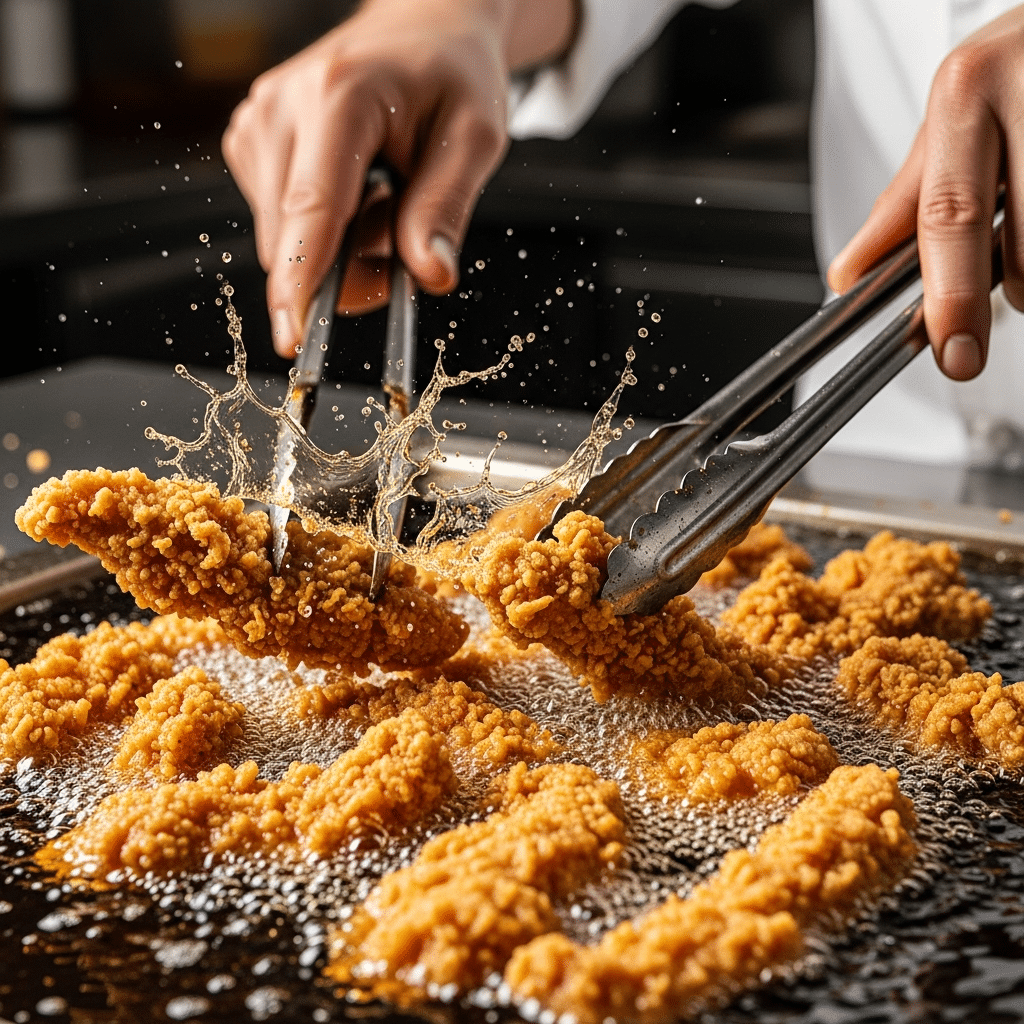
Chicken fries are thin, fry-shaped strips of chicken breast or tenderloin that are marinated, coated in a heavily seasoned flour and cornstarch mixture, and deep-fried until golden and ultra-crispy. They’re similar to chicken tenders but cut thinner — more like a French fry shape — making them perfect for dipping, snacking, and eating on the go. They were popularized by fast food chains like Burger King and KFC but are easily made at home with better flavor and fresher ingredients.
How do you make fried chicken fries at home?
Slice chicken into thin strips, marinate in seasoned buttermilk, coat in a spiced flour-cornstarch mixture, and fry in hot oil at 350°F (175°C) for 4–5 minutes until deeply golden and crispy. Drain on a wire rack and serve immediately with your favorite dipping sauce.
❤️ Why You’ll Love This Recipe
This fried chicken fries recipe is genuinely special. Here’s exactly why it’s going to become one of your most-made recipes:
- ✅ Insanely crispy coating that stays crunchy even after cooling
- ✅ Juicy, tender chicken inside — never dry, never rubbery
- ✅ Bold, layered seasoning in every single bite
- ✅ Better than fast food — fresher, crispier, more flavorful
- ✅ Ready in 35 minutes — perfect for weeknight dinners
- ✅ Kid-approved and crowd-pleasing — everyone goes crazy for these
- ✅ Perfect for parties, game days, and movie nights
- ✅ Multiple cooking options — deep fry, air fry, or oven bake
- ✅ Easily customizable — make them spicy, cheesy, smoky, or mild
- ✅ Budget-friendly — costs a fraction of restaurant or takeout pricing
🛒 Ingredients List
Serves 4 people generously
The Chicken
- 1.5 lbs (680g) chicken breast — sliced into thin fry-shaped strips
- (Or chicken tenderloins, which require minimal cutting)
The Buttermilk Marinade
- 1 cup buttermilk
- 1 teaspoon hot sauce (Frank’s RedHot or Tabasco)
- 1 teaspoon garlic powder
- 1 teaspoon onion powder
- ½ teaspoon smoked paprika
- ½ teaspoon salt
- ¼ teaspoon black pepper
The Crispy Coating
- 1½ cups all-purpose flour
- ½ cup cornstarch (the secret to maximum crispiness)
- 1 teaspoon garlic powder
- 1 teaspoon onion powder
- 1 teaspoon smoked paprika
- 1 teaspoon cayenne pepper (reduce for mild, increase for spicy)
- 1 teaspoon dried oregano
- 1 teaspoon salt
- ½ teaspoon black pepper
- ½ teaspoon white pepper
- ½ teaspoon baking powder (adds lightness to the crust)
For Frying
- Vegetable oil, canola oil, or peanut oil — enough for 2–3 inches deep in your pot
- (Peanut oil gives the best flavor and has a high smoke point)
Optional Garnish
- Flaky sea salt (sprinkle immediately after frying)
- Fresh chopped parsley
- Grated Parmesan cheese
- Drizzle of hot honey
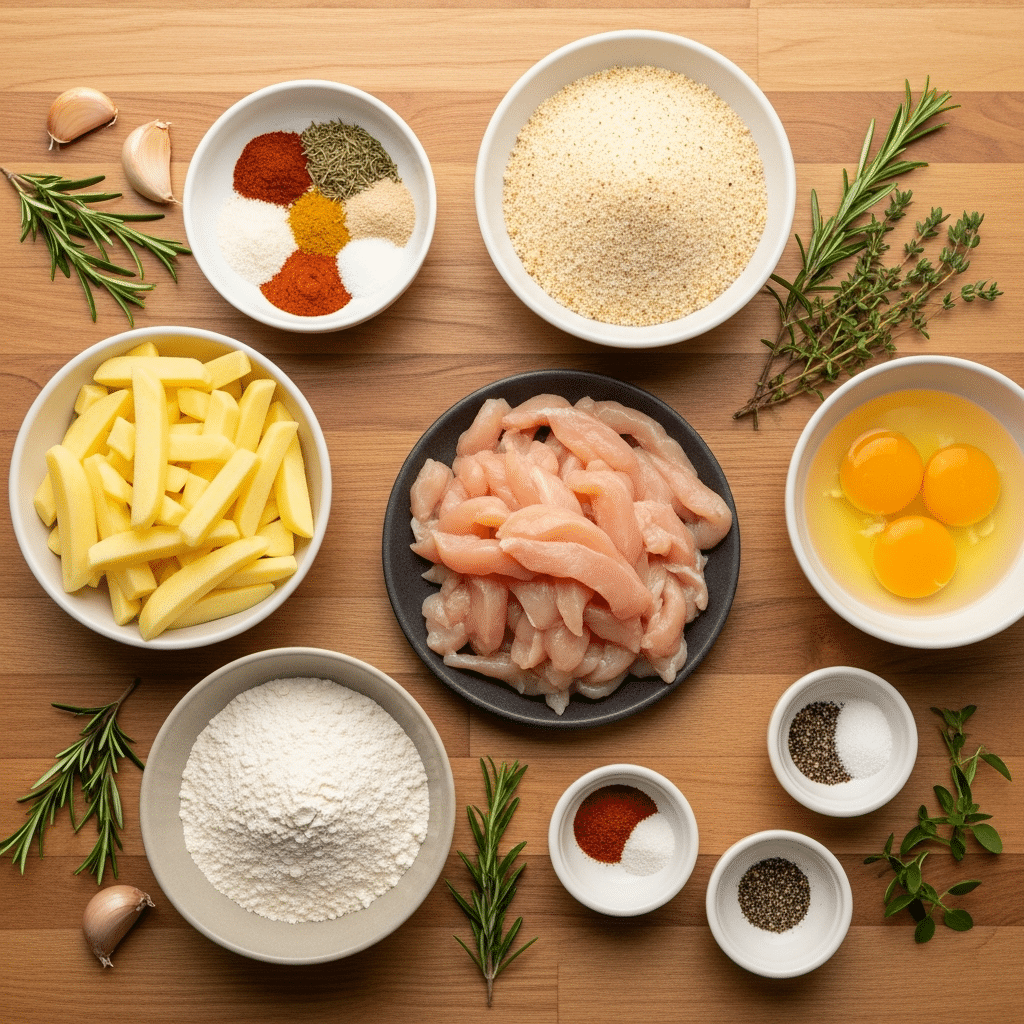
📝 Ingredient Notes
Why use cornstarch in the coating?
Cornstarch is the single most important secret to achieving that ultra-crispy, shatteringly crunchy coating that you get at good fried chicken restaurants. It inhibits gluten development in the flour, which means a lighter, crispier crust rather than a thick, doughy one. According to Serious Eats, a mixture of flour and cornstarch consistently outperforms flour alone for maximum crunch.
Why marinate in buttermilk?
Buttermilk is mildly acidic, which gently tenderizes the chicken proteins without making them mushy. It also helps the coating adhere perfectly and adds a subtle tangy richness to the flavor. If you don’t have buttermilk, you can make a quick substitute (see Variations section below).
What chicken cut works best?
Chicken breast is the standard choice for chicken fries because it slices cleanly into thin strips and cooks quickly. Chicken tenderloins are even better — they’re naturally tender, the perfect size, and require no slicing. Avoid chicken thighs for this specific recipe as they don’t hold the fry shape as well when sliced thin.
Why add baking powder to the coating?
A small amount of baking powder raises the pH of the coating and creates tiny bubbles during frying, resulting in a more textured, craggier, extra-crispy crust. It’s a restaurant trick that makes a noticeable difference.
What oil should I use for frying?
Use an oil with a high smoke point — vegetable oil, canola oil, or peanut oil are all excellent choices. Peanut oil is preferred by many fried chicken enthusiasts for its clean, neutral flavor and excellent high-heat stability. According to Healthline, peanut oil has a smoke point of around 450°F (232°C), making it ideal for deep frying.
🍳 Kitchen Tools Needed
| Tool | Purpose |
|---|---|
| Sharp chef’s knife | Slicing chicken into thin strips |
| Cutting board | Safe prep surface |
| 2 large mixing bowls | Marinade and coating |
| Large heavy-bottomed pot or Dutch oven | Deep frying |
| Candy/deep fry thermometer | Monitoring oil temperature |
| Wire rack set over baking sheet | Draining fried chicken fries |
| Spider strainer or slotted spoon | Removing chicken from oil |
| Tongs | Handling chicken safely |
| Paper towels | Backup draining option |
| Zip-lock bag (optional) | Marinating in the fridge |
👩🍳 Step-by-Step Instructions
Step 1: Slice Your Chicken Into Fry Shapes
Start with cold chicken breast — it’s much easier to slice cleanly. Place the chicken on your cutting board and slice it into strips that are approximately:
- Length: 3–4 inches long
- Width: ½ inch wide
- Thickness: ½ inch thick
Think of a thick-cut French fry — that’s the shape and size you’re going for. Try to keep them as uniform as possible so they all cook in the same amount of time.
Chef’s Tip: Pop your chicken in the freezer for 15–20 minutes before slicing. Slightly firmer chicken cuts much more cleanly and evenly into thin strips.
Step 2: Make the Buttermilk Marinade
In a large bowl, whisk together the buttermilk, hot sauce, garlic powder, onion powder, smoked paprika, salt, and black pepper until fully combined.
Add your chicken strips to the marinade and toss well to coat every piece completely. Cover the bowl with plastic wrap and refrigerate for:
- Minimum: 30 minutes
- Optimal: 2–4 hours
- Maximum: Overnight (up to 12 hours)
The longer you marinate, the more tender and flavorful your chicken will be. If you’re in a hurry, even 20 minutes at room temperature while you prep everything else will make a real difference.
Chef’s Tip: Add 2 tablespoons of dill pickle juice to your buttermilk marinade. This is the secret behind that uniquely tangy, incredibly juicy Chick-fil-A style flavor. Trust us on this one.
Step 3: Mix Your Crispy Coating
In a separate large, shallow bowl or baking dish, whisk together the flour, cornstarch, garlic powder, onion powder, smoked paprika, cayenne pepper, dried oregano, salt, black pepper, white pepper, and baking powder.
Mix thoroughly until every seasoning is evenly distributed throughout the flour mixture. Taste a tiny pinch of the dry coating — it should be well-seasoned, slightly spicy, and aromatic.
Chef’s Tip: Add 2–3 tablespoons of the buttermilk marinade into your flour coating and mix it in with your fingers. This creates small, irregular clumps in the flour — those clumps become the extra-crispy, craggy bits on the surface of your chicken fries that everyone fights over.
Step 4: Coat Your Chicken Fries
Now for the fun part. Remove the chicken strips from the marinade, letting the excess buttermilk drip off briefly — but don’t shake off all of it. You want the chicken moist so the coating adheres.
Dredge each chicken strip through the seasoned flour mixture, pressing firmly on all sides to ensure a thick, even coating. Really press it in — don’t be shy. Give each piece a good squeeze.
Place the coated chicken strips on a wire rack or clean plate. Let them rest for 5–10 minutes before frying. This resting time is important — it allows the coating to hydrate and adhere properly, which means it won’t fall off in the oil.
Chef’s Tip: For an even crispier, thicker crust, do a double dredge: after the first coating, dip the chicken back into the buttermilk, then back into the flour mixture again. Double-coated chicken fries are absolutely next-level.
Step 5: Heat Your Oil to the Perfect Temperature
Pour your oil into a large, heavy-bottomed pot or Dutch oven to a depth of 2–3 inches. Heat the oil over medium-high heat until it reaches exactly 350°F (175°C).
This temperature is critical. Here’s why:
| Oil Temperature | Result |
|---|---|
| Below 325°F | Soggy, greasy, undercooked coating |
| 325–340°F | Decent but not optimal crispiness |
| 350–365°F | Perfect — golden, crispy, not greasy |
| Above 375°F | Burns outside before chicken cooks through |
Use a deep-fry thermometer for accuracy. If you don’t have one, drop a tiny piece of bread into the oil — it should turn golden in about 60 seconds at the right temperature.
Step 6: Fry in Batches — This Step Matters
This is where most home cooks make their biggest mistake: overcrowding the pan. Adding too many chicken fries at once drops the oil temperature dramatically, leading to greasy, soggy coating instead of crispy perfection.
Fry in small batches of 5–7 strips at a time, depending on your pot size.
Carefully lower the chicken fries into the hot oil using tongs. Fry for:
- 4–5 minutes total, turning once or twice for even color
- Until deep golden brown on all sides
- Until the internal temperature reaches 165°F (74°C)
Food Safety Note: Always ensure chicken reaches an internal temperature of 165°F as recommended by the USDA food safety guidelines to eliminate harmful bacteria.
Step 7: Drain and Season Immediately
Remove the finished chicken fries with a spider strainer or slotted spoon and transfer them to a wire rack set over a baking sheet. Do not drain on paper towels — the steam gets trapped and makes the bottom soggy.
Immediately — while still piping hot — sprinkle with a pinch of flaky sea salt. Salt adheres perfectly to just-fried food and enhances every flavor in the coating.
Allow the oil to come back to 350°F before frying the next batch.
Step 8: Serve and Enjoy
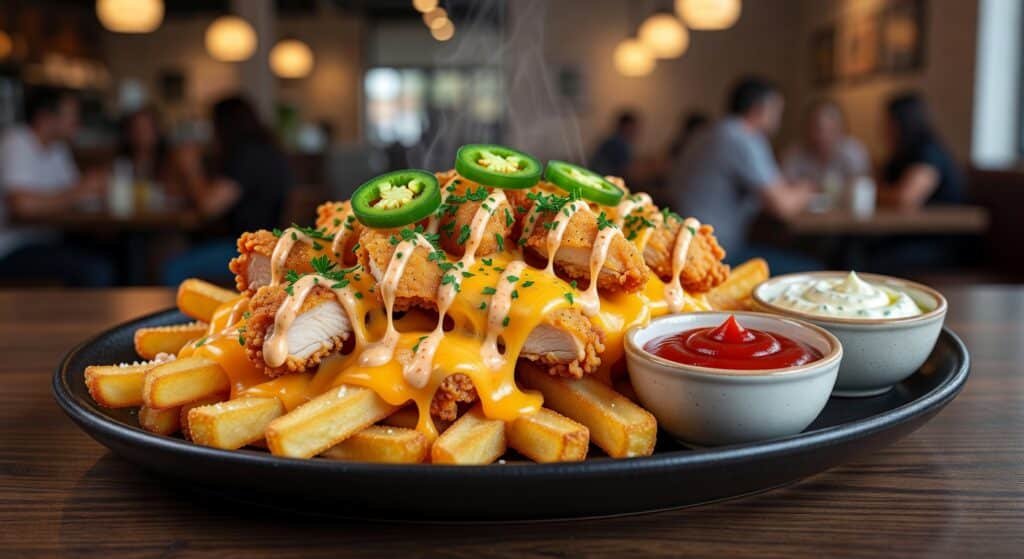
Pile your gorgeous, golden, incredibly crispy chicken fries onto a serving plate or parchment-lined tray. Serve immediately with your favorite dipping sauces (suggestions below) and watch them disappear in minutes.
⭐ Expert Cooking Tips
These professional-level tips will make your chicken fries genuinely extraordinary:
- Temperature is everything. Maintain 350°F throughout frying. Let the oil recover between batches. Consistent temperature = consistent crispiness.
- Season at every layer. Season the marinade, season the coating, and season right after frying. Layered seasoning is what separates good fried chicken from incredible fried chicken.
- Rest before frying. After coating, always rest the chicken for at least 5 minutes. This allows the flour to form a stronger bond with the chicken surface.
- Use a wire rack, not paper towels. Paper towels trap steam underneath the chicken, softening the crust. A wire rack allows air circulation all around, keeping the bottom just as crispy as the top.
- Keep finished batches warm. Place the wire rack in a 250°F (120°C) oven to keep finished chicken fries warm and crispy while you fry the remaining batches.
- Don’t move the chicken too much. Once the chicken fries are in the oil, let them sit undisturbed for the first 2 minutes. Moving them too early disrupts the crust formation.
- Double fry for ultimate crispiness. Fry at 325°F for 3 minutes, remove and rest for 2 minutes, then fry again at 375°F for 1–2 minutes. This professional restaurant technique produces an extraordinary crust.
❌ Common Mistakes to Avoid
| Mistake | Why It’s a Problem | The Fix |
|---|---|---|
| Overcrowding the oil | Drops temperature, creates soggy coating | Fry in small batches of 5–7 pieces |
| Oil too cool (below 325°F) | Greasy, heavy, undercooked coating | Always use a thermometer |
| Oil too hot (above 375°F) | Burnt outside, raw inside | Maintain steady 350°F |
| Skipping the marinade | Dry, bland, tough chicken | Marinate at least 30 minutes |
| Not pressing the coating firmly | Thin, patchy coating that falls off | Press firmly on all sides |
| Draining on paper towels | Soggy bottom crust | Always use a wire rack |
| Not resting after coating | Coating falls off in the oil | Rest 5–10 minutes before frying |
| Over-thickly sliced chicken | Uneven cooking, raw center | Slice to ½ inch thickness max |
| Forgetting to season after frying | Under-seasoned final product | Salt immediately after frying |
🔄 Variations & Substitutions
🌶️ Spicy Nashville Hot Chicken Fries
After frying, brush with a mixture of: 3 tbsp hot frying oil, 2 tbsp cayenne pepper, 1 tbsp brown sugar, 1 tsp smoked paprika, 1 tsp garlic powder. Fiery, sweet, and absolutely addictive.
🧀 Parmesan Garlic Chicken Fries
Immediately after frying, toss with melted butter, minced garlic, grated Parmesan, and fresh parsley. Rich, garlicky, cheesy, and outrageously good.
🍯 Hot Honey Chicken Fries
Drizzle finished chicken fries with hot honey and a sprinkle of flaky salt. The sweet-heat combination is unbelievably delicious.
🥵 Extra Spicy Korean Gochujang Chicken Fries
Add 1 tablespoon of gochujang paste and 1 teaspoon of gochugaru (Korean chili flakes) to the buttermilk marinade for a deeply spicy, slightly sweet, umami-rich flavor profile.
What can I substitute in this recipe?
| Ingredient | Substitution |
|---|---|
| Buttermilk | 1 cup milk + 1 tbsp lemon juice or vinegar (let sit 5 mins) |
| Chicken breast | Chicken tenderloins or thighs |
| Cornstarch | Potato starch or rice flour |
| Peanut oil | Vegetable oil, canola oil, or sunflower oil |
| Cayenne pepper | Chili powder or red pepper flakes |
| All-purpose flour | Gluten-free flour blend (for GF version) |
🌡️ Air Fryer Chicken Fries
Spray coated chicken fries with cooking spray. Air fry at 400°F (200°C) for 10–12 minutes, flipping halfway through. Not quite as crispy as deep-fried, but still excellent — and much lighter.
🍳 Oven-Baked Chicken Fries
Place coated chicken on a greased wire rack over a baking sheet. Spray generously with cooking oil. Bake at 425°F (220°C) for 18–22 minutes, flipping once at the halfway point until golden and crispy.
🥗 Best Dipping Sauces for Chicken Fries
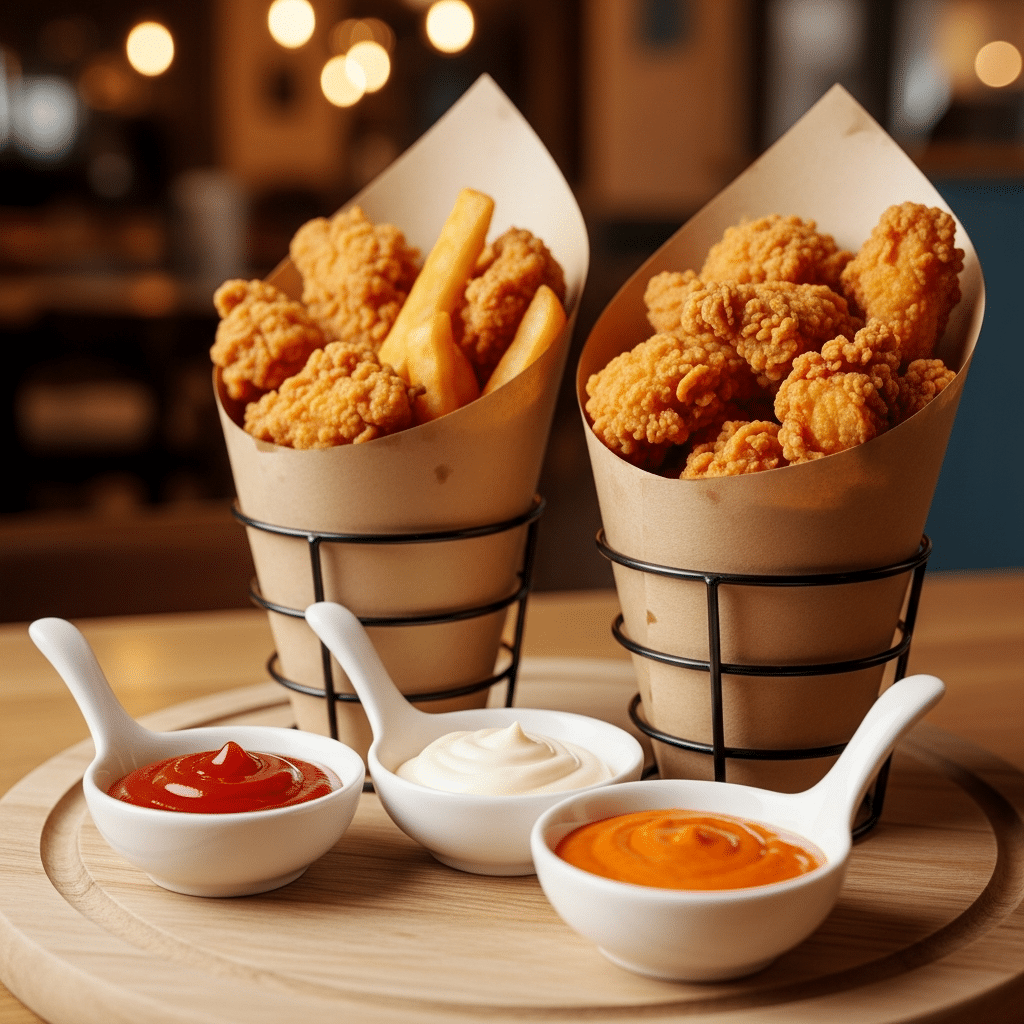
Chicken fries are nothing without great dipping sauces. Here are the best combinations:
| Sauce | Flavor Profile | Why It Works |
|---|---|---|
| Classic Ranch | Cool, creamy, herby | Balances the crispy, spicy coating |
| Honey Mustard | Sweet, tangy, smooth | Complements the savory chicken perfectly |
| Sriracha Mayo | Spicy, creamy, rich | Adds heat and richness |
| BBQ Sauce | Smoky, sweet, tangy | Classic American pairing |
| Buffalo Sauce | Fiery, buttery, tangy | Takes the heat up a notch |
| Cheese Sauce | Rich, cheesy, indulgent | Kids absolutely love this |
| Garlic Aioli | Garlicky, silky, bold | Sophisticated and delicious |
| Sweet Chili Sauce | Sweet, mildly spicy | Great Asian-inspired option |
🍟 Best Side Dishes to Serve with Chicken Fries
These chicken fries pair beautifully with:
- Classic French fries or waffle fries — the ultimate combo
- Creamy coleslaw — cool and refreshing against the crispy heat
- Mac and cheese — rich, cheesy, and comforting
- Corn on the cob — sweet and buttery contrast
- Pickle slices — the acidity cuts through the richness perfectly
- Garden salad — lightens up the meal nicely
- Onion rings — because more crispy things is always the answer
- Baked beans — smoky and sweet, a natural pairing
🧊 Storage & Reheating Tips
How long do fried chicken fries last?
| Storage Method | Duration |
|---|---|
| Room temperature | 2 hours maximum |
| Refrigerator (airtight container) | 3–4 days |
| Freezer (after cooling completely) | Up to 3 months |
How do you reheat chicken fries without losing crispiness?
The reheating method makes ALL the difference:
| Reheating Method | Temperature | Time | Result |
|---|---|---|---|
| Air fryer ⭐ Best | 375°F | 3–4 minutes | Incredibly crispy, like fresh |
| Oven on wire rack | 400°F | 8–10 minutes | Very good, stays crispy |
| Skillet (dry, no oil) | Medium-high | 2–3 minutes per side | Good crispiness |
| Microwave ❌ Avoid | High | 60–90 seconds | Soggy, rubbery — not recommended |
Pro Tip: Never microwave fried chicken if you can help it. The moisture it creates turns a perfectly crispy coating into something disappointingly soft and chewy. The air fryer is your absolute best friend for reheating anything fried.
Can I make chicken fries ahead of time?
Yes! You can coat the raw chicken fries and freeze them on a baking sheet before frying. Once frozen solid, transfer to a freezer bag. Fry straight from frozen at 325°F for 6–8 minutes — adding about 2 extra minutes to the cook time. Perfect for meal prep and quick dinners.
🥗 Nutrition Information
Per serving (approximately 6–7 chicken fries) — estimated values
| Nutrient | Amount |
|---|---|
| Calories | ~385 kcal |
| Protein | 32g |
| Total Fat | 16g |
| Saturated Fat | 3g |
| Carbohydrates | 26g |
| Fiber | 1g |
| Sugar | 1g |
| Sodium | 680mg |
| Cholesterol | 85mg |
Note: Nutrition values are estimates and vary based on oil absorption, exact coating amount, and portion size. Values calculated using USDA FoodData Central nutritional data for chicken breast, all-purpose flour, and frying oil.
Is fried chicken a good source of protein?
Yes — chicken breast is one of the leanest, highest-quality protein sources available. According to Healthline, a 3.5 oz (100g) serving of cooked chicken breast contains approximately 31 grams of protein, making it excellent for muscle maintenance and satiety.
❓ FAQs — People Also Ask
What are chicken fries made of?
Chicken fries are made from chicken breast or tenderloin sliced into thin, fry-shaped strips. They’re marinated in seasoned buttermilk to tenderize the meat and build flavor, then coated in a heavily spiced flour and cornstarch mixture before being deep-fried in hot oil until golden, crispy, and cooked through.
What is the difference between chicken fries and chicken tenders?
Chicken fries and chicken tenders are very similar but have key differences. Chicken tenders are typically wider, thicker, and flatter — resembling a large strip of chicken. Chicken fries are cut thinner and narrower — roughly the shape and size of a thick French fry. This thinner cut means a higher ratio of crispy coating to chicken, faster cooking, and better suitability for dipping. Both are delicious, but chicken fries are more snackable and fun to eat.
How do you make chicken fries crispy and keep them crispy?
The keys to crispy chicken fries that stay crispy are: use cornstarch in the coating (at least 25% of the flour mixture), fry at the correct temperature (350°F), drain on a wire rack not paper towels, and don’t cover them after frying (trapped steam softens the crust). For reheating, always use an air fryer or oven — never a microwave.
Can I make fried chicken fries without buttermilk?
Yes, absolutely. You can make a quick buttermilk substitute by mixing 1 cup of regular milk with 1 tablespoon of white vinegar or lemon juice. Stir and let it sit for 5 minutes until it curdles slightly. It works almost identically to real buttermilk in this recipe. You can also use plain yogurt thinned with a little milk.
What oil is best for frying chicken fries?
The best oils for frying chicken fries are peanut oil, canola oil, or vegetable oil — all of which have high smoke points above 400°F (205°C). Peanut oil is widely considered the gold standard for fried chicken because of its clean flavor and excellent heat stability. Avoid olive oil, which has too low a smoke point for deep frying and will burn before reaching the ideal temperature.
How do you know when chicken fries are cooked through?
Chicken fries are fully cooked when they reach an internal temperature of 165°F (74°C) — measured with an instant-read thermometer at the thickest part. Visually, fully cooked chicken fries are deep golden brown on the outside and the juices run clear when pierced. With ½ inch thick strips fried at 350°F, this takes approximately 4–5 minutes.
Can I bake chicken fries instead of frying?
Yes — oven-baked chicken fries are a lighter alternative. Place coated chicken strips on a greased wire rack over a baking sheet, spray generously with cooking oil, and bake at 425°F (220°C) for 18–22 minutes, flipping once. While not quite as crispy as deep-fried, they’re still delicious and significantly lower in calories and fat.
Can I make chicken fries in an air fryer?
Absolutely. Air fryer chicken fries are excellent — crispy outside, juicy inside, and significantly lighter than deep-fried versions. Spray coated chicken fries generously with cooking spray, air fry at 400°F (200°C) for 10–12 minutes, flipping at the halfway point. Make sure not to overcrowd the air fryer basket.
📋 Recipe Card
🍗 Fried Chicken Fries Recipe
| Detail | Info |
|---|---|
| Prep Time | 20 minutes |
| Marinating Time | 30 minutes – 4 hours |
| Cook Time | 15 minutes |
| Total Time | 35 minutes (plus marinating) |
| Servings | 4 people |
| Calories | ~385 kcal per serving |
| Cuisine | American |
| Course | Appetizer / Snack / Main |
| Difficulty | Easy |
| Method | Deep Fry / Air Fry / Oven Bake |
INGREDIENTS:
Chicken:
- 1.5 lbs chicken breast, sliced into thin strips
Buttermilk Marinade:
- 1 cup buttermilk
- 1 tsp hot sauce
- 1 tsp garlic powder
- 1 tsp onion powder
- ½ tsp smoked paprika
- ½ tsp salt, ¼ tsp black pepper
Crispy Coating:
- 1½ cups all-purpose flour
- ½ cup cornstarch
- 1 tsp each: garlic powder, onion powder, smoked paprika, cayenne
- 1 tsp dried oregano
- ½ tsp baking powder
- Salt, black pepper, white pepper to taste
For Frying:
- Vegetable, canola, or peanut oil (2–3 inches deep)
INSTRUCTIONS:
- Slice chicken breast into thin, fry-shaped strips (½ inch wide).
- Whisk together buttermilk marinade ingredients. Add chicken, refrigerate 30 min–4 hrs.
- Mix flour coating ingredients in a shallow bowl. Add 2–3 tbsp of marinade into flour; mix to create craggy bits.
- Remove chicken from marinade, dredge in seasoned flour, pressing firmly. Rest 5–10 minutes.
- Heat oil to 350°F (175°C) in a heavy-bottomed pot.
- Fry in small batches (5–7 pieces) for 4–5 minutes, turning once, until deep golden.
- Drain on a wire rack. Season immediately with flaky salt.
- Serve hot with dipping sauces of choice.
✍️ Final Thoughts
Here’s the truth: once you make these fried chicken fries at home, you’re going to have a really hard time ordering them from a fast food restaurant ever again.
There’s just no comparison. The coating is crispier. The chicken is juicier. The seasoning is bolder, deeper, and more complex. And the satisfaction of making something this incredibly good from scratch — in your own kitchen, in under 40 minutes — is genuinely hard to beat.
Whether you’re making them for a Friday night family dinner, a game day spread, a birthday party, or just because it’s Tuesday and you deserve something amazing — these chicken fries deliver every single time.
Play with the seasonings. Try the Nashville hot variation. Experiment with different dipping sauces. Make them your own. That’s the beauty of cooking at home — you’re always in control.
Now go heat up that oil, get those chicken strips ready, and prepare yourself for what might honestly be the best thing you’ve ever made in your kitchen.
You’ve got this. And it’s going to be absolutely delicious.
Happy frying from all of us at DailyRecipeLab! 🍗🔥
📚 Sources & References
- Serious Eats — The Food Lab: The Best Buttermilk Fried Chicken
- Healthline — Protein in Chicken: Breast, Thigh, and More
- Healthline — Peanut Oil: Is It Good or Bad for You?
- USDA FoodData Central — Nutritional Data for Chicken Breast and Ingredients
- USDA Food Safety — Chicken from Farm to Table — Safe Internal Temperatures
- FDA — Food Safety and Proper Oil Handling
- BBC Good Food — Fried Chicken Recipes and Techniques
- Simply Recipes — How to Make Buttermilk Substitutes
© 2025 DailyRecipeLab — All Rights Reserved | Recipe developed, tested, and perfected by the DailyRecipeLab kitchen team
Pingback: Cowboy Butter Chicken Wings Recipe – Bold, Buttery & Absolutely Irresistible - Dailyrecipelab