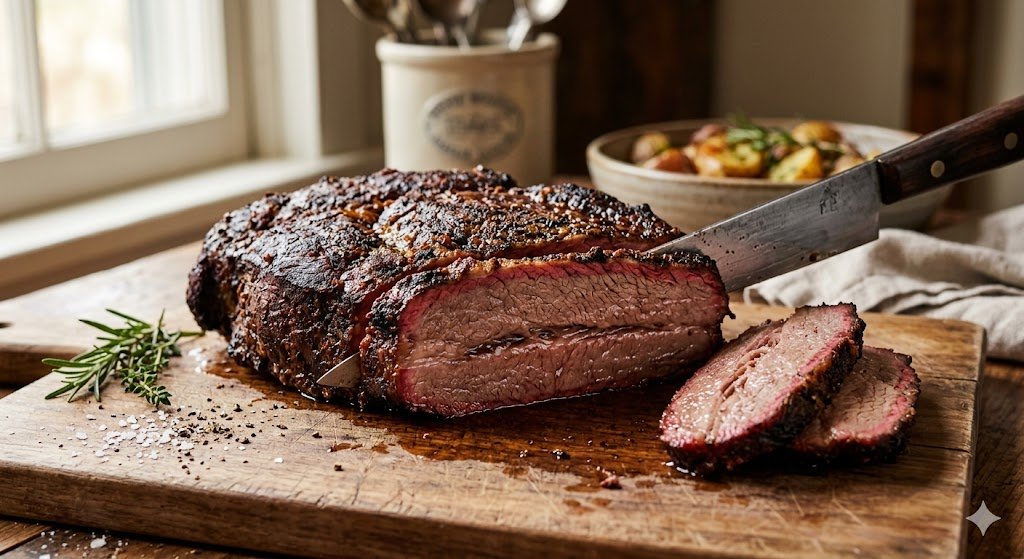
If you’ve never made a smoked chuck roast recipe, you’re seriously missing out. This cut is often called the “poor man’s brisket” — and honestly? Once you taste it, you’ll question why brisket gets all the attention. Chuck roast is affordable, forgiving, and when it hits that smoker low and slow, it transforms into something absolutely incredible. Tender, juicy, with a deep mahogany bark on the outside and melt-in-your-mouth beef on the inside. I’ve made this more times than I can count, and it never disappoints.
Why You’ll Love This Recipe
- 🔥 Budget-friendly — Chuck roast costs a fraction of brisket
- 🕐 Beginner-friendly — No complicated trimming or techniques required
- 💪 Incredible bark — A simple rub creates deep, crusty exterior flavor
- 🍖 Pull-apart tender — Perfectly juicy every single time
- 🌲 Bold smoky flavor — Real wood smoke penetrates every bite
- 🍽️ Versatile — Serve as slices, pulled beef sandwiches, or tacos
- 🧊 Great leftovers — Tastes even better the next day
Ingredients
(Serves 6–8)
For the Chuck Roast:
| Ingredient | Quantity | Notes & Substitutions |
|---|---|---|
| Beef chuck roast | 3–4 lbs | Look for good marbling — the fat equals flavor |
| Yellow mustard | 2 tbsp | Acts as a binder; sub with olive oil or hot sauce |
| Kosher salt | 2 tsp | Don’t skimp — it builds the bark |
| Black pepper | 2 tsp | Coarse ground preferred |
| Garlic powder | 1 tsp | Sub with granulated garlic |
| Onion powder | 1 tsp | Adds subtle depth |
| Smoked paprika | 1 tsp | Enhances smoke color and flavor |
| Brown sugar | 1 tsp | Optional — adds slight sweetness to bark |
| Cayenne pepper | ½ tsp | Optional — skip if heat-sensitive |
For the Spritz (optional but recommended):
| Ingredient | Quantity | Notes |
|---|---|---|
| Apple cider vinegar | ½ cup | Keeps bark moist without washing it away |
| Water | ½ cup | Mix with ACV for the spritz bottle |
For Wrapping (Texas Crutch):
| Ingredient | Quantity | Notes |
|---|---|---|
| Beef tallow or butter | 2 tbsp | Adds richness inside the wrap |
| Butcher paper or foil | 1–2 sheets | Butcher paper = better bark; foil = faster cook |
Kitchen Tools Needed
- Offset smoker, pellet grill, or kettle grill
- Instant-read thermometer (Thermoworks Thermapen or similar)
- Spray bottle for spritzing
- Butcher paper or heavy-duty aluminum foil
- Sharp boning or slicing knife
- Wire cooling rack + sheet pan
- Cutting board with juice groove
- Heat-resistant gloves
Step-by-Step Instructions
Step 1 — Prep the Chuck Roast (Night Before or 1 Hour Ahead)
Pat the chuck roast completely dry with paper towels. Moisture is the enemy of a good bark, so really get it dry.
Coat the entire surface with yellow mustard — a thin, even layer. Don’t worry about the mustard flavor; you won’t taste it at all. It just helps the seasoning stick.
Mix all your dry rub ingredients together, then season the roast generously on all sides. Press the rub in firmly. For best results, let it sit uncovered in the fridge overnight — that dry brine works magic on the texture and flavor.
Step 2 — Fire Up the Smoker
Preheat your smoker to 250°F. This is your sweet spot for chuck roast — hot enough to render fat, slow enough to build flavor.
Best wood choices: oak, hickory, or post oak for that classic BBQ profile. Apple or cherry wood works too if you want a slightly sweeter smoke note. Avoid mesquite — it can get bitter over a long cook.
Step 3 — Put the Roast On
Place the chuck roast directly on the grate, fat side up. Insert your probe thermometer into the thickest part of the meat, making sure you’re not touching bone or fat.
Close the lid and leave it alone for the first 2 hours. Resist the urge to open it every 20 minutes — every peek drops your smoker temp and adds time.
Step 4 — Spritz (Starting at Hour 2)
After 2 hours, the bark should be starting to set. It’ll look dry and slightly darker. This is exactly what you want.
Begin spritzing with your apple cider vinegar mixture every 45–60 minutes. A light spritz — don’t drench it. You want to add moisture without washing off that beautiful crust forming on the surface.
Step 5 — Push Through the Stall
Around 155–165°F internal temp, the roast will hit “the stall” — temperature stops rising and sits there for what feels like forever. This is normal and happens because moisture evaporates from the surface, cooling the meat.
You have two options:
- Push through it — keep cooking unwrapped for a firmer, deeper bark
- Wrap it — speeds up the cook and keeps moisture inside
Step 6 — Wrap It (Recommended)
At 165°F, pull the roast off the smoker. Lay out a sheet of butcher paper, add 2 tablespoons of beef tallow or butter, place the roast on top, and wrap it tightly.
Return to the smoker. The internal temp will start climbing again fairly quickly now.
Step 7 — Pull It Off at the Right Temp
Target internal temperature: 200–205°F
But don’t just go by temperature alone. Probe the roast with a thermometer or skewer — it should slide in with almost zero resistance, like going through warm butter. That’s your real doneness signal.
Total cook time on the smoker: approximately 6–8 hours depending on roast size and smoker consistency.
Step 8 — Rest the Meat
This step is non-negotiable. Wrap the roast in a towel and place it in a cooler (no ice) for at least 1 hour. Two hours is even better.
Resting allows the juices to redistribute through the meat. Skip this and all those beautiful juices run straight onto your cutting board instead of staying in your beef.
Step 9 — Slice or Pull
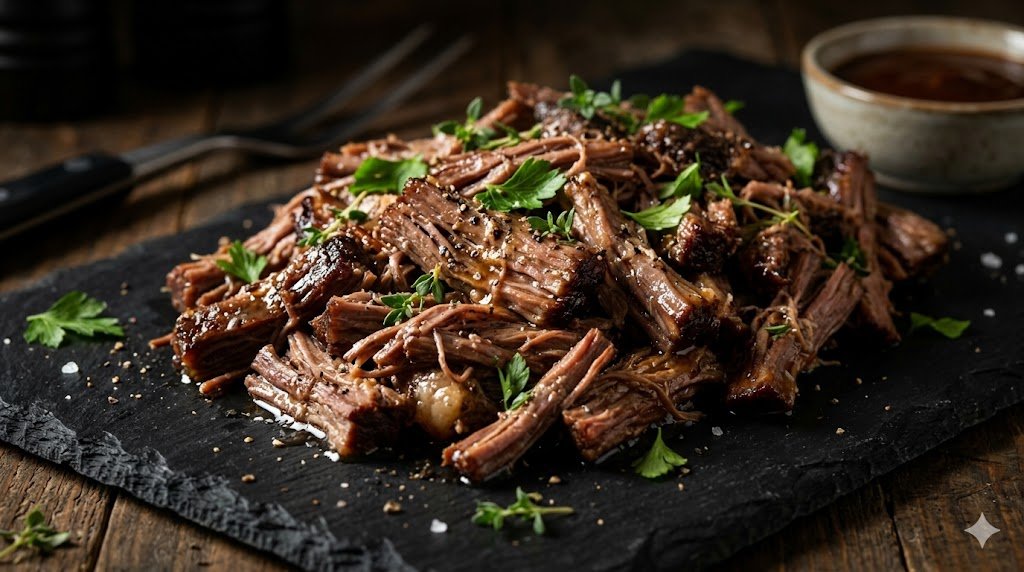
Unwrap carefully — save every drop of those juices and pour them back over the meat.
For slices: cut against the grain into ½-inch pieces.
For pulled beef: use two forks or your hands (with gloves) and pull apart the meat. It should shred with almost no effort at 200°F+.
Pro Tips
- Don’t skip the rest period — it genuinely makes a 15–20% difference in juiciness
- Fat side up always — the fat renders down and self-bastes the meat throughout the cook
- Consistent smoker temp beats everything — big temp swings kill your bark and timing
- Season heavier than you think — the thick bark needs aggressive seasoning to taste right through the crust
- A 3 lb roast is ideal for first-timers — easier to manage and still delivers incredible results
- Use a wire rack inside your smoker so airflow hits all sides evenly
Common Mistakes to Avoid
- ❌ Cooking at too high a temp — 275°F+ can dry out chuck before it has time to break down properly
- ❌ Opening the smoker constantly — every peek adds 15–30 minutes to your cook time
- ❌ Skipping the resting period — you will regret this immediately
- ❌ Not probing for feel — relying only on temperature without the probe-tenderness check leads to tough meat
- ❌ Using too much wood at once — thick white smoke is bitter smoke; you want thin blue smoke
- ❌ Not drying the meat before seasoning — wet surface = steamed bark, not a crust
Easy Variations
🌮 Smoked Beef Tacos
Pull the smoked chuck roast and serve in warm corn tortillas with pickled red onions, cilantro, and cotija cheese.
🥪 Pulled Beef Sandwiches
Pile pulled beef onto brioche buns with coleslaw and your favorite BBQ sauce.
🍜 Smoked Beef Ramen
Slice leftovers thin and drop into a hot ramen broth with soft-boiled eggs. Genuinely excellent.
🌶️ Spicy Version
Double the cayenne and add 1 tsp of chipotle powder to your rub for serious heat.
🫙 Mississippi Pot Roast Style
After wrapping, add a few pepperoncini peppers and a packet of ranch seasoning inside the wrap. Rich and tangy.
Storage Tips
- Refrigerator: Store in an airtight container with juices poured over for up to 4 days
- Freezer: Vacuum seal or store in freezer bags with cooking juices for up to 3 months
- Pro tip: Slice or pull before freezing — it reheats faster and more evenly
Reheating Tips
- Best method: Place in a covered skillet or saucepan over low heat with a splash of beef broth. Heat gently until warmed through — usually 8–10 minutes.
- Oven method: Cover tightly with foil at 300°F for 20–25 minutes with a small amount of beef broth added.
- Avoid microwave if possible — it dries out the edges quickly and loses texture.
Nutrition Information
(Per serving, based on 8 servings — approximate values)
| Nutrient | Amount |
|---|---|
| Calories | ~420 kcal |
| Protein | 38g |
| Total Fat | 28g |
| Saturated Fat | 11g |
| Carbohydrates | 3g |
| Sugar | 1g |
| Sodium | 610mg |
| Iron | 15% DV |
Values are estimates and will vary based on exact ingredients and serving size.
7. FAQs
Q1: What temperature should I smoke a chuck roast at?
Smoke your chuck roast at 250°F for the best results. This low-and-slow temperature allows the tough connective tissue to break down fully without drying out the meat.
Q2: How long does it take to smoke a chuck roast?
Plan on roughly 1.5–2 hours per pound at 250°F. A 3–4 lb chuck roast typically takes 6–8 hours total, including the stall period.
Q3: What internal temp should smoked chuck roast reach?
Pull your chuck roast when the internal temperature hits 200–205°F and when a probe slides in with zero resistance. Temperature and feel together tell you it’s done.
Q4: Do I need to wrap my chuck roast while smoking?
Wrapping isn’t required, but it’s highly recommended. Wrapping in butcher paper around 165°F helps push through the stall faster and keeps the meat juicy without sacrificing bark.
Q5: What’s the best wood for smoking chuck roast?
Oak and hickory are the top choices for bold, classic BBQ flavor. Cherry or apple wood adds a slightly sweeter, milder smoke. Avoid mesquite — it can turn bitter over a long cook.
Q6: Can I make smoked chuck roast on a pellet grill?
Absolutely. A pellet grill set to 250°F works perfectly. Use oak or hickory pellets for the best flavor profile.
Q7: Why is my smoked chuck roast tough?
If your chuck roast is tough, it didn’t cook long enough or didn’t rest long enough. The collagen in chuck needs sustained heat above 195°F to fully convert to gelatin. Give it more time — it will get there.
8. RECIPE CARD SUMMARY
| Detail | Info |
|---|---|
| Recipe Name | Smoked Chuck Roast Recipe |
| Prep Time | 15 minutes (+ overnight dry brine optional) |
| Cook Time | 6–8 hours |
| Rest Time | 1–2 hours |
| Total Time | 7–10 hours |
| Calories | ~420 kcal per serving |
| Cuisine | American BBQ |
| Course | Main Course |
| Difficulty | Intermediate |
| Servings | 6–8 people |
| Best Wood | Oak, Hickory, or Cherry |
| Smoker Temp | 250°F |
| Pull Temp | 200–205°F |