I still remember the first time I made this osso buco recipe for a dinner party. The whole apartment smelled like a cozy Italian trattoria for hours. That rich, tomato-wine aroma slowly bubbling away? Pure magic.
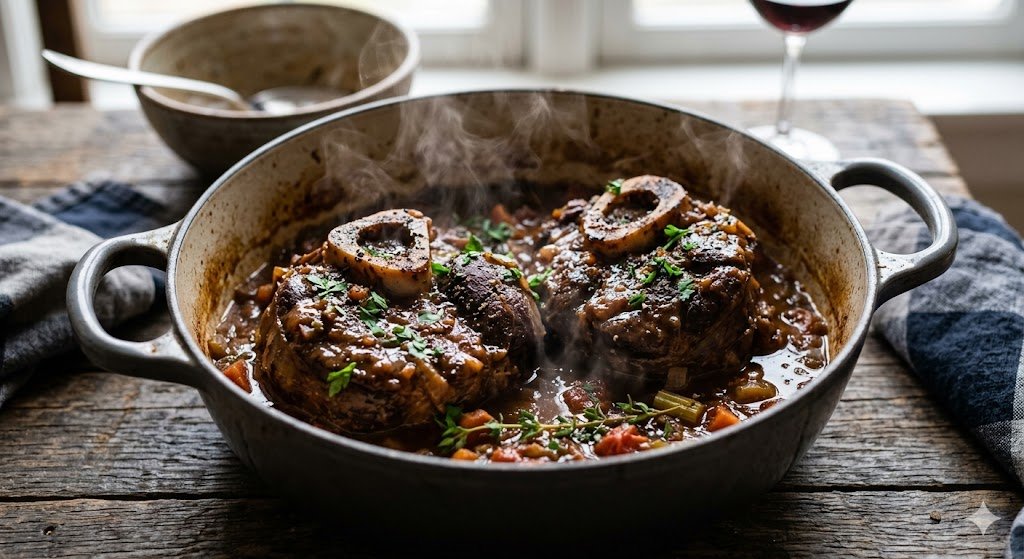
If you’ve never made osso buco before, don’t let the fancy name scare you. It’s really just beautifully braised veal shanks. The meat becomes so tender it practically falls off the bone, and that marrow — oh, that buttery marrow — is a hidden treasure. Scoop it out and spread it on crusty bread. You’ll thank me.
This version sticks to the traditional Milanese style: no tomatoes (just a little tomato paste for depth), lots of white wine, and a final punch of gremolata to wake everything up. It takes a few hours, but most of that is hands-off. Let’s cook.
Why You’ll Love This Recipe
- One pot, big flavor – All the browning and braising happen in the same Dutch oven.
- Fall-apart tender – Low, slow heat transforms tough shanks into silky, pull-apart meat.
- Make-ahead friendly – Tastes even better the next day.
- Impressive but easy – Looks like restaurant food, requires only basic skills.
Ingredients
For the osso buco base:
- 4 veal shanks (about 1½ to 2 inches thick) – Ask your butcher for center-cut hind shanks. They have more marrow.
- ½ cup all-purpose flour – For dredging. Use gluten-free blend if needed.
- 3 tbsp olive oil – Regular olive oil, not extra virgin (that burns).
- 1 large onion, finely diced – About 1 cup.
- 2 carrots, finely diced – About ¾ cup.
- 2 celery stalks, finely diced – About ¾ cup.
- 4 garlic cloves, minced – Fresh only, please.
- 2 tbsp tomato paste – Adds richness without making it saucy.
- 1 cup dry white wine – Pinot Grigio or Sauvignon Blanc. Don’t use cooking wine.
- 2 cups beef or veal broth – Low-sodium so you control the salt.
- 1 cup chicken broth – Adds roundness. Water works but broth is better.
- 2 bay leaves
- 4 sprigs fresh thyme – Or 1 tsp dried.
- Salt and black pepper – Go easy on salt until the end.
For the gremolata (don’t skip this):
- Zest of 1 lemon – Use a microplane, avoid the white pith.
- 2 tbsp fresh parsley, finely chopped – Flat-leaf Italian parsley.
- 2 garlic cloves, minced super fine – Almost a paste.
Kitchen Tools Needed
- Dutch oven (6–8 quart) or heavy-bottomed pot with lid
- Tongs
- Wooden spoon
- Microplane or fine grater
- Small bowl for gremolata
- Sharp knife and cutting board
Step-by-Step Instructions
1. Prep and season (10 minutes)
Pat the veal shanks completely dry with paper towels. This is crucial for browning. Season both sides generously with salt and pepper. Pour the flour onto a plate. Dredge each shank lightly, shaking off excess. You want a thin coating, not a thick paste.
2. Brown the shanks (12–15 minutes)
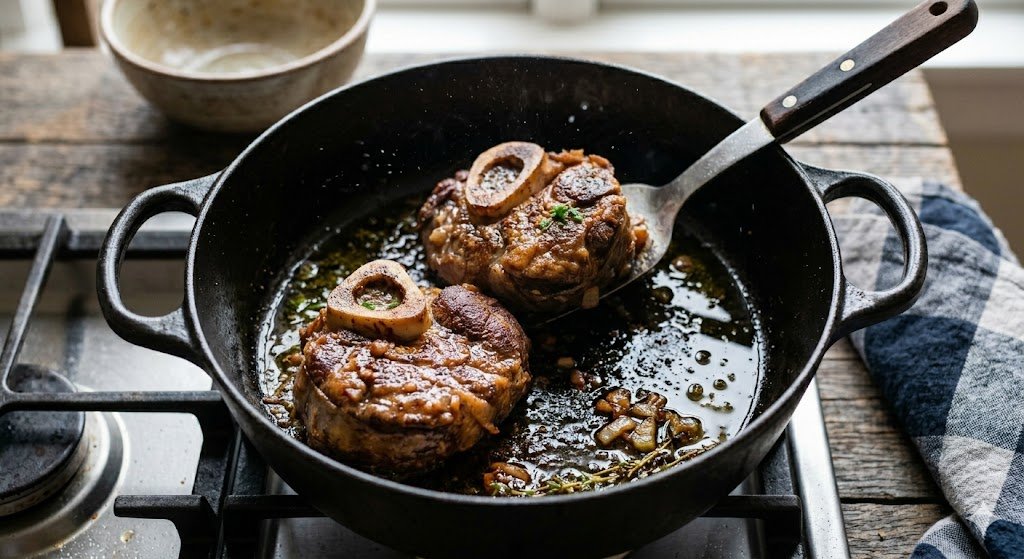
Heat olive oil in your Dutch oven over medium-high heat until it shimmers. Place the shanks in — don’t crowd them. Work in two batches if needed. Let them sit undisturbed for 3–4 minutes. When they release easily from the pot, flip. You’re looking for deep golden-brown, not burnt. Transfer to a plate.
Visual cue: The bottom should look like a copper penny.
3. Sauté the vegetables (5–7 minutes)
Lower heat to medium. Add onion, carrot, and celery. Cook, stirring occasionally, until soft and lightly browned, about 5 minutes. Add minced garlic and cook one more minute — your kitchen will smell amazing.
4. Build the braising liquid (3 minutes)
Stir in tomato paste. Cook it for 1–2 minutes until it darkens to a brick-red color. This step removes bitterness. Pour in the white wine, scraping up all those stuck brown bits from the bottom of the pot (fond = flavor). Let the wine bubble and reduce by half, about 2 minutes.
5. Braise low and slow (2 to 2½ hours)
Return the shanks to the pot, nestling them into the liquid. Add both broths, bay leaves, and thyme. The liquid should come about two-thirds up the sides of the meat — no need to fully submerge. Bring to a gentle simmer, then cover and transfer to a 325°F (163°C) oven. Or keep it on the stovetop at the lowest possible simmer.
Sensory note: After an hour, the smell turns sweet and meaty. After two hours, the meat starts pulling away from the bone.
6. Test for doneness (2 hours in)
Pierce a shank with a fork. It should slide in with zero resistance. If not, braise another 30 minutes. The internal temperature should reach 200–205°F for that shredded texture.
7. Rest and skim (10 minutes)
Carefully remove the shanks to a platter and tent with foil. Strain the braising liquid if you want it silky-smooth, or just skim off excess fat with a spoon. I usually skip straining — those soft veggies are delicious over polenta or mashed potatoes.
8. Make the gremolata (5 minutes)
While the osso buco rests, mix lemon zest, parsley, and minced garlic in a small bowl. That’s it. No salt needed — it’s a fresh explosion on top of the rich meat.
9. Serve
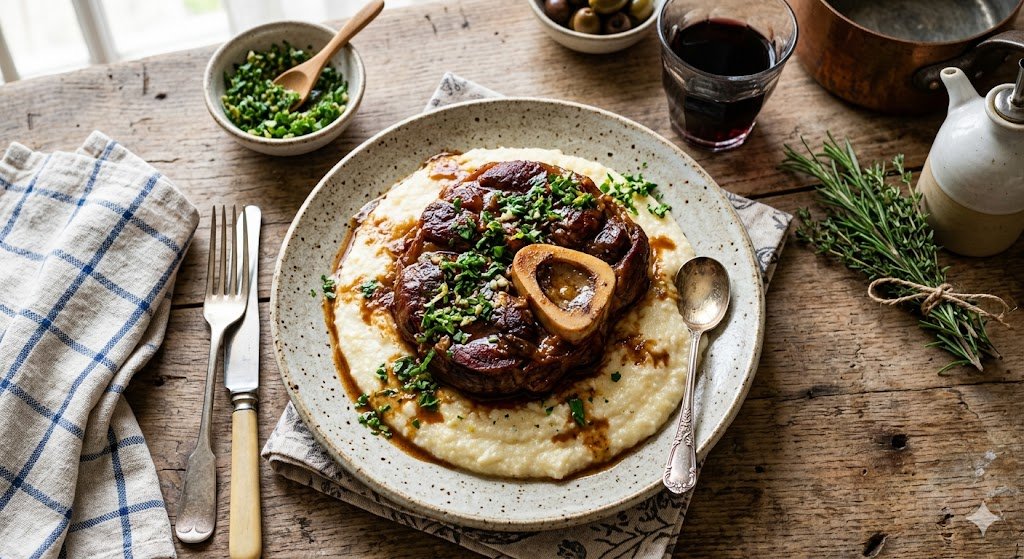
Place a veal shank on a shallow bowl or plate. Spoon plenty of sauce over the top. Sprinkle a generous pinch of gremolata over each shank. Serve immediately.
Pro Tips
- Ask for “hind shanks” – They’re meatier and have that perfect marrow cross-section.
- Brown in batches – Overcrowding steams the meat. Golden color = deep flavor.
- Make ahead rule – Osso buco always tastes better the next day. Braise, cool, refrigerate overnight, then gently reheat. The flavors marry beautifully.
- Serve with something to soak up the sauce – Creamy polenta, saffron risotto (risotto alla Milanese is the classic pairing), or crusty bread.
Common Mistakes to Avoid
- Skipping the drying step – Wet meat won’t brown. Pat those shanks like they owe you money.
- Rushing the braise – Two hours minimum. If the meat doesn’t feel like butter, it’s not done.
- Adding too much liquid – You want a braise, not a soup. The shanks should sit partly above the liquid.
- Forgetting the gremolata – I’ve made osso buco without it. It’s sad. The gremolata cuts through the richness and makes everything pop.
Easy Variations
- Pressure Cooker Osso Buco – Use sauté mode to brown, then pressure cook on high for 50 minutes. Natural release.
- Slow Cooker Version – Brown everything first (don’t skip this), then transfer to slow cooker. Cook on low for 6–8 hours.
- Beef Shank Substitute – Veal is traditional but expensive. Beef shanks work great; just braise an extra hour.
Storage Tips
Fridge: Keeps for up to 4 days in a sealed container. The sauce will solidify slightly — that’s gelatin, a good thing.
Freezer: Freeze without the gremolata (make fresh later). Shanks + sauce freeze beautifully for up to 3 months. Thaw overnight in the fridge.
Reheating Tips
- Stovetop: Low heat, covered, with a splash of broth if the sauce thickened too much. Takes 10–15 minutes.
- Oven: 325°F, covered, for 20 minutes.
- Microwave: Only if you’re in a rush — use 50% power and cover with a damp paper towel.
Nutrition Information
(Per serving, approximately 1 shank with sauce)
- Calories: 520
- Protein: 42g
- Fat: 28g
- Carbohydrates: 12g
- Fiber: 2g
- Sodium: 680mg (varies by broth)
Recipe Card Summary
| Category | Details |
|---|---|
| Prep Time | 20 minutes |
| Cook Time | 2 hours 15 minutes |
| Total Time | 2 hours 35 minutes |
| Calories | 520 kcal |
| Cuisine | Italian |
| Course | Main Course |
| Difficulty | Intermediate |
| Servings | 4 servings |
FAQs
Can I make osso buco recipe without wine?
Yes. Replace white wine with extra broth plus 1 tablespoon of white wine vinegar or lemon juice for acidity.
Do I have to use veal?
Not at all. Beef shanks or even lamb shanks work. Just increase braising time for beef by 30–60 minutes.
Why is my meat tough after braising?
It hasn’t cooked long enough. Collagen needs time to break down into gelatin. Keep braising and check every 20 minutes.
Can I freeze osso buco with the gremolata?
No. Gremolata gets bitter in the freezer. Make it fresh when you reheat.
What’s the best side dish for osso buco?
Creamy polenta or risotto alla Milanese (saffron risotto). Mashed potatoes or wide egg noodles work in a pinch.
How do I eat the bone marrow?
Use a small spoon or a narrow fork handle to scoop it out. Spread on toast or mix into the sauce.
Can I cook this osso buco recipe in a regular pot on the stove?
Absolutely. Keep the heat at the lowest possible simmer and check liquid levels every hour.


Pingback: Seafood Boil Recipe - Dailyrecipelab